Hey everyone, let’s cut to the chase – if you’re running a factory, construction site, or even operating outdoor event gear, regular plugs won’t cut it when moisture’s around. I get it, as someone who’s been an industrial plug supplier for years, I’ve fielded so many “which industrial plug is actually waterproof?” questions that I’ve lost count. A lot of folks mix up “water-resistant” and “waterproof” all the time, and that’s where they end up buying gear that fails the second a little rain hits, or worse, a spill from a hose. Let’s break this down straight, no fancy jargon – just the stuff that actually matters for your setup. Industrial Plug

First off, let’s clarify the difference because that’s the root of most confusion. Water-resistant just means it can handle a little splashing or dampness – think a plug you use in a covered garage. Waterproof? That’s a whole different ballgame. It’s tested to seal out water entirely, no matter if it’s full submersion, constant hose spray, or heavy rain for hours. The key here is IP ratings – that’s the industry standard for ingress protection, so forget guessing; just look for that label. For industrial use, you want IP67 or IP68, full stop. Wait, what do those numbers actually mean? The first digit is solid particle protection, the second is water. IP6 means totally dust-tight – no dirt, sawdust, or construction site debris getting in, which is huge for industrial areas. Then the second digit: 7 is submersion up to 1 meter for 30 minutes, perfect for things that might get knocked into a puddle or hosed down briefly. IP8 is even better – it’s continuous submersion deeper than 1 meter, so if your plug’s going to be in a water tank, outdoor fountains, or near a persistent water source, that’s the one you want. Anything lower like IP44? That’s just splash-proof, not waterproof – I’ve seen way too many new clients grab those by mistake and end up with fried equipment, so I always flag that upfront.
Now, which specific industrial plug types actually hit those IP ratings? Let’s go through the most common ones you’ll run into, so you know exactly what to look for. First up, the most popular heavy-duty option: screw-locking industrial plugs. These aren’t the flimsy consumer plugs you pick up at a hardware store – they have a rubber or thermoplastic seal that compresses tight when you twist and lock them into the socket, and the housing is made of tough polycarbonate or stainless steel. No loose gaps, no air getting in, so they nail IP67 and IP68. I’ve supplied these to construction sites all over the place – they get dragged through mud, splashed with concrete mix, even left out in a monsoon, and I’ve barely had any returns for water damage. The only catch? You have to make sure the seal isn’t cracked or worn down – if it’s damaged, it won’t seal right, so it’s good practice to check that before each use, like you’d check a tire before a long drive.
Next, there’s the cam-type (or bayonet) industrial plug – wait, don’t sleep on these. They lock in with a quarter-turn, so they’re way faster to connect and disconnect than screw-locking ones, which is a big win for busy assembly lines or event setups. A lot of people think they’re less secure, but modern cam-type plugs from good suppliers are actually designed with an O-ring seal around the plug base, so they still hit IP67. I use these for trade show booths all the time – we’re setting up and taking down in 10 minutes flat, and if it rains mid-event, no issues. Just make sure the cam mechanism is fully engaged – if it’s not twisted all the way, that seal doesn’t line up, so keep an eye on that.
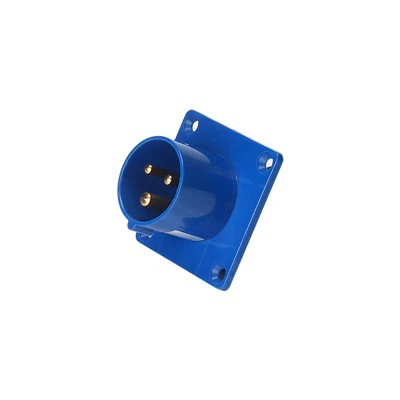
What about when you’re wiring into a panel? Waterproof industrial inlets and plugs work the same, but they’re meant to mount to a surface, like a machine or a wall. A lot of my clients use these for outdoor machinery – like pump systems, conveyor belts near loading docks, or lighting rigs for parking lots. The inlet has a gasket that seals against the wall when you mount it, so when you plug the male end in, the whole thing is water-tight. I will say, skip any cheap no-name inlets here – I’ve had clients bring me ones that leak water after a week, because their gasket was thin plastic instead of rubber. Stick to suppliers that test their IP ratings, not just print them on the box.
Now, what’s a common mistake people make even when they get a “waterproof” plug? Oh man, this one trips everyone up – the cord glands. The plug housing’s seal is only half the battle; where the power cord exits the plug, that’s another potential entry point for water. A lot of cheaper plugs have loose cord glands that don’t grip the cable tight, so water can wick up the cord and get inside the plug, even if the rest is sealed. That’s why I only sell plugs with strain-relief cord glands that clamp down firmly on the cable, plus often a rubber seal around the exit hole. For example, if you’re using a 14-gauge outdoor-rated cable, the gland should fit perfectly, no gaps. If you’re making your own cords (some industrial shops do that), make sure you use matching glands for your cable size – I’ve seen people use a one-size-fits-all gland and wonder why their plug’s leaking.
Wait, what about outdoor industrial tools? Like pressure washers, welders, or refrigeration units for cold storage that might get exposed to moisture? Yeah, their plugs need to be waterproof too – but a lot of factory owners just swap in a regular plug and wonder why it burns out. No, you need to get a purpose-built waterproof plug for the tool. Welding is a big one – welders generate a ton of heat, and if you’re working outside near a rain gutter, the last thing you want is your plug shorting mid-job. The waterproof industrial plugs I supply for welders are not just sealed – they’re also rated for high heat, so they don’t soften or warp when the machine’s running. Same with refrigeration units in cold storage – they deal with condensation all the time, so regular plugs will corrode the prongs over time, but waterproof plugs have corrosion-resistant metal pins too, not just brass that rusts.
I should also mention IP69K, in case you’re dealing with extreme moisture. That’s the rating for high-temperature, high-pressure washdowns – like food processing plants, breweries, or meatpacking facilities, where they spray equipment with hot water and sanitizer every shift. Standard IP67 won’t hold up to that kind of force; IP69K is tested for jet sprays from any angle at 80°C (176°F) and 80-100 bar pressure. I actually have a line of plugs made specifically for food processing, because those folks can’t risk cross-contamination from water leaking into the plug – plus, they need something that’s easy to wipe down and doesn’t harbor bacteria. I’ve had a few clients that tried to use IP67 plugs in a washdown area, and within a month they were corroded and useless, so it’s a game of match the rating to your actual use case.
Let’s get real about cost too – I know a lot of people try to go cheap, but cutting corners on waterproof industrial plugs is a bad call. A good IP67 plug isn’t that much more expensive than a flimsy water-resistant one, but replacing fried equipment, fixing electrical issues, or dealing with downtime? That costs way more. I’ve had a client who bought 50 cheap water-resistant plugs for a construction site last year, and when a storm hit, 32 of them shorted out, costing him $1,200 in lost materials and overtime labor. He switched to my IP67 plugs after that, and in the last year we’ve only had 1 plug come back because someone ran it over with a forklift – not water damage, just physical damage. It’s just not worth skipping the good stuff when it comes to moisture-prone industrial setups.
Another thing to watch for: counterfeit IP ratings. Scammers will slap IP67 on a plug that’s actually IP44, and there’s no easy way to tell just by looking. I’ve seen these on Amazon, random hardware stores, even some big box supply sites – super tempting because they’re cheaper, but you’re rolling the dice. How do you avoid that? Stick to reputable suppliers (shoutout to, well, me, I guess) that can provide test reports for their plugs’ IP ratings. If a supplier can’t show you third-party test data, walk away. Real IP tests are done by independent labs, so any legit industrial plug supplier will have that on hand – no exceptions.
Let’s also talk about maintenance, because even the best waterproof plugs won’t last forever. Once a month, give ’em a quick check: wipe out any dirt or debris from the seal, make sure the O-ring isn’t cracked or flattened, and test the locking mechanism to make sure it’s holding tight. If you store plugs for a while, keep them in a dry, cool place – don’t leave them sitting out in the rain for months when you’re not using them, that can degrade the seal over time. I’ve had a client who stored his spare plugs in a shed, and after a winter, the seals were brittle and cracked – he didn’t check, so he thought he bought bad plugs, turns out it was just improper storage.
Wait, what about different voltages? A lot of people ask if waterproof plugs are different for 120V vs 480V industrial power. Yeah, they are, but the water-seal part is the same – the IP rating still applies. The prongs and housing are just built to handle higher voltage, so you don’t have to sacrifice the waterproofing for power. All the plugs I supply, no matter the voltage (15A, 30A, 60A, whatever), have the same IP67/IP68 sealing, so you get both performance and moisture protection. That’s a big one – I’ve seen clients match a 480V plug with a low-seal housing, and it leaks immediately, even if it’s rated for higher voltage. It’s all about matching the specs.
At the end of the day, the right waterproof industrial plug is all about matching it to your specific environment. If you’re just dealing with occasional splashes in a covered warehouse, maybe a lower-rated one works, but if you’re out in the open, near constant water, or doing washdowns, you need that IP67, IP68, or IP69K plug. Don’t fall for the “cheap waterproof” hype, and always check that the seal and locking mechanism are solid – that’s where most people go wrong.
If you’re still unsure which plug fits your setup – whether it’s for a construction site, food processing plant, outdoor event, or any other spot with moisture – hit me up. I’ve worked with all kinds of industrial teams, so I can help you pick the right one without the guesswork. No salesy pitches, just straight advice, and we can work out pricing that fits your budget too. Shoot me a message to get the conversation started – we can go over your needs, send over test docs if you want, and get you set up with plugs that actually hold up to whatever you throw at them.
Schuko Socket References
International Electrotechnical Commission (IEC) 60529: Degrees of Protection Provided by Enclosures (IP Code)
National Electrical Manufacturers Association (NEMA) Standard 250: Enclosures for Electrical Equipment (Non-Explosion Proof)
ISO 20653: Road Vehicles – Degrees of Protection (IP Code) – Protection of Electrical Equipment Against Water
Zhejiang Hefeng Electric Co., Ltd.
Zhejiang Hefeng Electric Co., Ltd. is one of the most professional industrial plug manufacturers and suppliers in China, featured by quality products and low price. Please rest assured to buy durable industrial plug made in China here from our factory. Also, OEM service is available.
Address: Wenzhou Daqiao Industrail Park, Beibaixiang Town, Yueqing City, Zhejiang Province, China
E-mail: hefengplug@chinahfe.com
WebSite: https://www.hfcee.com/
