If you’ve ever stood in front of a grain processing line, watching bushels of wheat, corn, or soybeans move through each stage from raw harvest to finished product, you might have wondered: how much energy does all this actually take? As someone who’s spent 12 years designing, building, and troubleshooting grain processing lines for farms, co-ops, and large food manufacturers, I can tell you it’s not a one-size-fits-all number. It’s tied to every choice we make in the line’s design, the grains we’re processing, and how we run the equipment day-to-day. Grain Processing Line
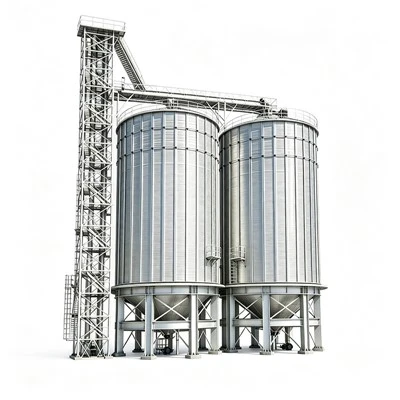
Let’s start with the basics: energy use in grain processing is almost entirely electricity, with a tiny fraction coming from natural gas for drying, depending on the region. I’ve worked on lines that run solely on grid power in the Pacific Northwest and others that use a mix of solar and natural gas in the Midwest, so I’ve seen how that shifts the total consumption. The first thing to break down is the processing stages, because each step has its own energy footprint.
Grain processing doesn’t just mean grinding flour, by the way. It starts with receiving, right? When a truckload of soybeans pulls into a facility, those grains are usually wet from harvest—sometimes 15-20% moisture content. The receiving stage uses a lot of energy to first unload and clean the grain. That means using grain elevators, which are basically large bucket conveyors that lift thousands of pounds of grain per hour, and screeners that sift out straw, chaff, and small debris. A standard 50,000-bushel-per-hour line I installed in Indiana a few years back uses a 75-horsepower (HP) motor for its primary elevator and a 50-HP motor for the main screener. That’s just the start, and those two machines alone use around 125,000 watt-hours (Wh) per hour when running at full capacity. But here’s the thing: most lines don’t run at 100% capacity all day. During harvest season, they might run 16-hour days, but in off-season, they might only run 4 hours a day, so that number shifts drastically.
Next comes cleaning and sorting, which is the stage that has the biggest impact on final product quality—and often, on energy use if not designed right. After initial screening, grains go through specific sorters: gravity tables to separate heavier, plump grains from lighter ones, magnetic separators to pull out any metal bits that fell into the harvest, and optical sorters that use cameras to spot discolored grains or foreign objects like plastic. Each of these machines has its own motor, and some of the newer optical sorters actually use a small amount of compressed air to blow away bad grains, which adds a bit to the total electricity bill. The gravity tables I’ve used typically run on 20-30 HP, and optical sorters for corn can be 15 HP each. I once had a customer who switched from three older gravity tables to two newer, energy-efficient models, and they cut that stage’s energy use by 28%—no loss in output, just better design. That’s a key point: choosing the right equipment for your line doesn’t mean sacrificing speed, it means using less energy to get the same or better results.
Then there’s conditioning and drying, which is where most of the thermal energy (natural gas or propane) comes in, but still uses electricity for the fans and controls. This is a stage people often get wrong, in my experience. Grains need to be at a specific moisture content to be stored long-term—usually 12-14% for wheat, 13-15% for corn. If you dry them too fast, you get cracked grains that don’t mill well; too slow, and you waste energy. A common mistake I see is lines using oversized dryers just to handle peak harvest volume, but oversized dryers run less efficiently because they’re not operating at their optimal load. The standard thermal energy for drying wheat is around 3,000 British thermal units (BTUs) per pound of water removed, according to the data I’ve collected over the years. Add in the electricity for the dryer’s fans (a 100-HP fan for a 10,000-bushel-per-hour dryer) and the temperature controls, and that stage can be 40-50% of the line’s total energy use during harvest season.
Now, milling, the stage most people associate with grain processing. This is where grains are ground into flour, cornmeal, or animal feed, and it uses a lot of mechanical energy from electricity. The type of mill matters a lot here: stone mills are popular for artisanal flour, but they use more energy per pound of flour than roller mills, which are the standard for commercial lines. A 200,000-bushel-per-day wheat roller mill line I designed in Ohio uses around 0.45 kilowatt-hours (kWh) per pound of wheat milled into flour, compared to 0.65 kWh per pound for a stone mill of the same capacity. That’s a big difference for a facility running 24/7 during production. I always tell customers that if they’re making commercial grade flour, roller mills are the way to go for lower energy use, but if they’re targeting the artisanal market, the stone mill’s energy cost is worth the higher product price.
Other stages—like packaging, conveying finished product, and controls—add to the total, but they’re smaller. Packaging lines use conveyor belts (usually 5-10 HP), filling machines (10-20 HP), and sealing equipment, and controls use a small, constant amount of electricity to run the PLCs that monitor the whole line. I’ve found that those miscellaneous stages make up about 5-10% of the line’s total energy use, so they’re not negligible, but the big numbers come from the earlier stages: drying, milling, and conveying.
Now, let’s put this all together into real numbers from lines I’ve installed, so you can get a sense of what this looks like in practice. For a small to medium-sized grain processing line, say 10,000 bushels per day of corn for animal feed, total energy use works out to around 0.28 kWh per pound of corn processed, plus about 1,200 BTUs per pound for drying if the corn is harvested at 18% moisture. Wait, let’s convert that to more relatable numbers: that line would use roughly 28,000 kWh per day, plus about 28 million BTUs of gas per day for drying. For a larger line, 100,000 bushels per day of wheat for flour, that jumps to around 0.42 kWh per pound of wheat, plus 1,100 BTUs per pound for drying, so 420,000 kWh per day and 110 million BTUs of gas. But here’s the catch: these are peak numbers. If you run the line at 75% capacity year-round, the per-pound energy use goes up because you’re not utilizing the full efficiency of the motors and dryers. Motors run at their most efficient when they’re operating at 70-100% of their rated load, so underloading them wastes energy.
I’ve also noticed a big difference between grain processing lines that are properly maintained and those that aren’t. Last year, a customer called me because their energy bill for their 50,000-bushel-per-hour line was 15% higher than their neighbor’s identical line. When I showed up to troubleshoot, I found that the conveyor belts were loose, so they were slipping and using more energy to move the same amount of grain, and the screener screens were clogged with old grain, so it was taking longer to process each load. After tightening the belts and replacing the screens, their energy use dropped by 13% immediately. That’s a free win—no new equipment, just regular maintenance. I always tell my customers that a 10-minute check of belts, screens, and motor pulleys every week can save them thousands on energy bills every year.
Another factor that changes energy consumption is the type of grain. Corn is denser than wheat, so moving the same volume of corn takes more energy than wheat. Soybeans have a higher oil content, which means they need less drying energy than corn or wheat, so that stage of the line uses less power for soy processing. I had a customer who switched their line from processing corn to soybeans between harvest seasons, and their total energy use dropped by 18% overnight, just because of the grain type. That’s something to keep in mind if you’re processing multiple grains on the same line—you might need to adjust the drying temperatures or conveyor speeds to optimize for each, which keeps energy use low.
What about newer lines versus older ones? I installed a line in Kansas in 2005, and comparing it to a line I finished in 2021 of the same capacity, the newer line uses 22% less energy per pound of grain processed. That’s all thanks to variable frequency drives (VFDs) on motors, which adjust the motor speed based on how much grain is moving, instead of running at full speed all the time. Older lines use fixed-speed motors, so even if you’re only moving half the grain, the motor uses the same amount of electricity. VFDs are a game-changer—they cost a bit upfront, but they pay for themselves in energy savings in 18-24 months, in my experience. I always include VFDs as standard on all the lines I design, because I’ve seen the difference they make on customer bills.
Let’s talk about common misconceptions too. A lot of people think that bigger lines use less energy per pound than smaller ones, which is true up to a point. But if a line is too big for your operation, running it at low capacity will actually make per-pound energy use higher. For example, if you only need to process 10,000 bushels a day, buying a line rated for 50,000 bushels a day will mean that line is only operating at 20% capacity, and energy use per pound will be almost twice as high as a line sized for 10,000 bushels. That’s why I spend a lot of time talking to customers about their current and projected needs before designing a line—size matters, and overbuying capacity is a huge waste of energy and money.
I also work with customers who are switching to renewable energy to power their lines, which is a growing trend. A grain processing line that runs on solar or wind energy has almost no carbon footprint, and the energy cost is fixed for the long term, instead of fluctuating with grid electricity and natural gas prices. I recently helped a dairy co-op install a 1-megawatt solar array that powers their grain feed processing line, and their energy bills dropped by 70% last year. That’s a big benefit for their bottom line, especially with volatile energy prices.
So, when someone asks me “what’s the energy consumption of a grain processing line,” my answer is always: it depends, but we can design a line that’s optimized for your specific needs, so you’re not wasting a single watt or BTU. From my years in this business, I’ve learned that the best grain processing lines aren’t just fast or high-capacity—they’re efficient, because that saves my customers money and helps them compete in a market where margins are tight.
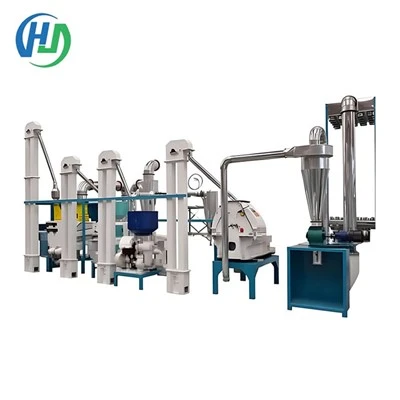
If you’re in the market for a new grain processing line, or you’re looking to upgrade your current one to cut energy costs, I’d be happy to walk you through the numbers, talk through your specific grain types and volume needs, and show you how we design lines that balance performance and efficiency.
Grain Processing Line References
- American Society of Agricultural and Biological Engineers. (2020). Energy Use in Grain Post-Harvest Processing. ASABE Standards.
- U.S. Department of Agriculture. (2022). Grain Drying Energy Efficiency Guide. USDA Agricultural Research Service.
- International Society of Automation. (2021). Variable Frequency Drives for Industrial Conveying Systems. ISA Publications.
Henan Huinong Machinery Co., Ltd.
Henan Huinong Machinery Co., Ltd. is one of the most professional grain processing line manufacturers and suppliers in China, featured by quality products and low price. Please rest assured to buy discount grain processing line from our factory. We also accept customized orders.
Address: No.6, Northeast Corner of the Intersection of Renmin Road and Zhujiang Road, New District, Huaxian County, Henan Province
E-mail: frank.tang@huinongmachinery.com
WebSite: https://www.huinongmachinery.com/
