Hey there, fellow energy managers, plant ops folks, and anyone who’s ever stared at a sky-high utility bill wondering where all the airflow money went. If you’re working with ventilation, cooling, exhaust, or any kind of air-moving system, you’ve probably crossed paths with axial fans. I’ve been supplying axial fans for almost a decade now, and let me tell you—one of the biggest questions I get from clients isn’t “how much air can this move?” It’s “why is my axial fan blowing so much energy away?” Axial Fan
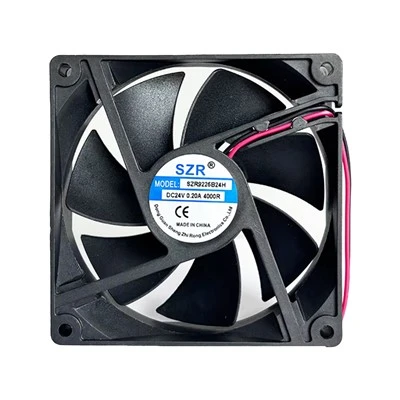
Look, I get it. When you’re in the market for a fan, you’re usually focused on two main things: does it move enough air to get the job done, and can it fit in the space I have? Energy consumption often gets pushed to the back burner until the first utility bill hits. But here’s the thing—axial fans aren’t all created equal, and the way you pick and run yours can make a massive difference in how much energy it guzzles. Today, I want to break this down like I do when I’m chatting with a client over a coffee—no jargon, just real stuff that actually applies to your setup.
First, let’s keep it simple: what even is an axial fan? If you’ve seen a big, flat fan (think the ones on warehouse rooftops, or the tube-shaped ones for server room cooling, or even the box fans you use in your garage), that’s an axial fan. Air flows parallel to the fan’s shaft—so it goes straight through the blades, not at an angle like a centrifugal fan. They’re super popular because they’re cheap to buy, easy to install, and great for high airflow at low pressure. But that low-pressure sweet spot is also where energy efficiency gets tricky.
A lot of people don’t realize that axial fan energy use is tied directly to how well it’s matched to your system. Let’s say you get a fan that’s too big. Sure, it’ll move all the air you need, but it’s also pushing way more than required. So what happens? It’s spinning at full speed, wasting energy, and probably making more noise too. On the flip side, if your fan is too small, it’s straining to hit your airflow target—dragging amps, running hot, and still not getting the job done. Neither scenario is good for your wallet.
I saw this play out last year with a manufacturing client out in Chicago. They had a 10-horsepower axial fan running on their paint booth exhaust. The old supplier had just sold them the biggest fan that would fit in their existing ductwork, and it was drawing 8.2 kWh every hour. That’s insane for a system that only needed 5.5 kWh to do the job. We swapped it for a fan matched exactly to their duct size, airflow, and pressure, and boom—they dropped to 5.1 kWh. That’s almost 40% less energy, and their exhaust quality stayed the same. Dude saved like $1,800 a year on his electric bill, easy.
So why is matching so important? Let’s talk fan laws real quick—no need for a engineering degree here. The affinity laws for fans basically say that if you cut a fan’s speed in half, energy use drops by a factor of EIGHT. Yeah, that’s not a typo. Speed is the biggest driver of energy, not just the size of the fan. But how do you adjust speed without buying a whole new fan every time? Variable frequency drives (VFDs) are a game-changer here. I don’t push VFDs on every client, but if your system has fluctuating airflow needs (like a warehouse where you need more cooling in summer than winter, or a plant that runs different shifts), a VFD can let you dial the speed up or down instead of running at full tilt 24/7.
Another big culprit when it comes to wasted energy: poor installation. I’ve seen clients grab an axial fan, bolt it to the wall right next to a 90-degree duct bend, and wonder why it’s using so much power. Axial fans need straight duct runs on both the inlet and outlet to work right. If the air hits the fan at an angle (like right after a bend or a jump), it’s called “flow distortion,” and that makes the fan work way harder to move the same amount of air. Even something as simple as sticking a screen over the fan inlet can cause extra drag. I once had a client with a greenhouse who put a bug screen over his intake fan to keep pests out, and that screen was adding 15% extra static pressure—his fan energy use jumped by 12% just from that. We swapped to a finer, low-pressure-drop screen, and he was back to normal.
Blade design is another thing I tell clients not to sleep on. Not all axial fan blades are the same. The old-school flat blades are cheap, but they’re super inefficient—they create a lot of turbulence and waste energy. Modern airfoil-shaped blades (curved, like an airplane wing) move air much smoother, so they do the same job with less speed and less energy. I’ve tested side-by-side: a 7.5-horsepower airfoil axial fan moves the same air as a 10-horsepower flat-blade fan, and uses 25% less energy. It’s a small up-front cost, but you’ll make that back in energy savings in a year or two.
Wait, what about when you need to run an axial fan at part load? That’s where blade pitch matters, too. Some axial fans have adjustable blades, so you can angle them to match your airflow needs without touching speed. That’s called a variable pitch axial fan, and it’s perfect for systems where demand changes a lot. For example, a bakery I work with uses adjustable pitch fans for their oven cooling. They crank the blades to full angle when the ovens are running at 3am, and dial them back when things slow down at noon. Their energy use is 30% lower than if they had a fixed-pitch fan running at constant speed.
But let’s get real—energy consumption isn’t just about the fan itself. It’s also about how you maintain it. A dirty fan is a waste of energy. Dust, grease, and debris build up on the blades over time, making them unbalanced and changing how they move air. I’ve seen a fan that was running at 10% over its rated energy use just because it had a thin layer of grime on the blades. A quick clean-up brought it right back to spec. And don’t forget the motor! If your motor is old (like pre-2010), it’s probably a standard efficiency motor. Upgrading to an IE3 or IE4 premium efficiency motor can save you another 10-15% on energy, especially if your fan runs 24/7.
Let’s bust a common myth right now: axial fans are always less efficient than centrifugal fans. That’s only true if you’re running them in their wrong operating range. Centrifugal fans are better for high-pressure, low-airflow jobs, but axial fans are the most efficient for low-pressure, high-airflow jobs—which is exactly what most industrial, commercial, and residential ventilation systems are. The key is picking the right fan for your pressure and airflow needs, not just grabbing whatever is cheap.
I talked to a warehouse owner last month who was switching from a centrifugal fan to an axial fan for his rooftop ventilation. He was worried it would use more energy, but we calculated his system needed 2,500 CFM at 0.5 inches of static pressure. The axial fan we offered was 78% efficient at that point, vs. the centrifugal he was replacing which was only 65% efficient. Even though the centrifugal had a bigger motor, the axial was using 22% less energy. He saved over $2,000 a year just by switching to the right fan, not a bigger or more expensive one.
So what are the actionable steps you can take right now to cut your axial fan energy use? Let’s make this simple, no complicated spreadsheets required:
-
Audit your current fan: Find out how much airflow (CFM) your system actually needs, not what the old fan was moving. You can get a cheap CFM meter online, or call a supplier like me to help. If your fan is moving more than 10% extra CFM, it’s oversized—look at downsizing or adding a VFD.
-
Check your ductwork: Make sure you have straight duct runs on the inlet and outlet, no sharp bends right next to the fan. If you have screens or filters, make sure they’re rated for low pressure drop—high-efficiency filters can add a lot of drag if they’re not matched to your fan.
-
Upgrade blade design: If your blades are flat, consider switching to airfoil blades. The up-front cost is small, and the energy savings add up fast. If you have variable demand, go for adjustable pitch.
-
Maintain regularly: Clean the blades every 6 months, check for unbalanced vibrations, and make sure the motor is running at peak efficiency. A $50 cleaning can save you hundreds a year in energy.
-
Match your fan to your load: Don’t buy a fan because it fits your space. Buy it because it works for your CFM, pressure, and how you use your system. If demand changes, a VFD or adjustable blades are worth the investment.
Look, I’m not here to sell you a fan you don’t need. I’m here because I’ve been in this business long enough to know that most people overpay for axial fan energy without even realizing it. A good fan isn’t just about moving air—it’s about moving air for less money, without sacrificing performance. Whether you’re running a small retail store ventilation system, a large industrial exhaust, or a commercial greenhouse, there’s an axial fan that’s perfect for your energy needs.
If you’re tired of overpaying for your axial fan energy bills, or you’re not sure if your current setup is running as efficiently as it could be, reach out. I work with all kinds of clients, from small businesses to big plants, and I’ll help you find the right fan for your needs—no pressure, no confusing sales pitches, just straight talk about how to save energy and money.
DC Axial Fan References
- ASHRAE Handbook – HVAC Systems and Equipment, American Society of Heating, Refrigerating and Air-Conditioning Engineers, 2020.
- Fan Energy Efficiency Manual, U.S. Department of Energy, Office of Energy Efficiency and Renewable Energy, 2019.
- "Axial Fan Performance and Energy Consumption," Journal of Air Management & Pollution Control Association, vol. 67, no. 8, 2017, pp. 921-930.
- Variable Frequency Drives for Fan Systems, National Renewable Energy Laboratory, 2021.
Dongguan Shengzhirong Electronics Co., Ltd.
As one of the most professional axial fan manufacturers and suppliers in China, our products have good reputation in the market. Please rest assured to wholesale high quality axial fan made in China here from our factory. Customized orders are welcome.
Address: 6/F, Building 2, No.68, Shunxing 2nd Road, Dajingtou 2nd Industrial Zone, Dalang Town, Dongguan City, Guangdong, China
E-mail: szr_coolingfan@163.com
WebSite: https://www.szrfan.com/
