Hey there! If you’re a small trailer owner—whether you’re hauling a utility trailer to the hardware store, towing a pop-up camper for a weekend trip, or moving a few pieces of furniture—you know how important those trailer lights are. I’ve been in the wireless trailer light game for over 6 years now, supplying small trailer owners and even local repair shops with kits that actually work, and let me tell you: the wrong kit can turn a 10-minute trip into a total headache, or worse, get you a ticket. So what’s the best wireless trailer light kit for small trailers? Let’s break it down like we’re chatting over a coffee—not a bunch of jargon you’ll forget 2 minutes in. Wireless Trailer Lights
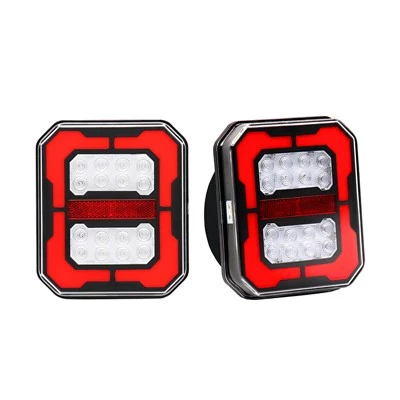
First, let’s get one thing straight: “small trailers” aren’t one-size-fits-all. We’re talking about utility trailers under 10 feet, teardrop campers that weigh less than 1,500 lbs, and even tiny boat trailers. The last thing you want is a bulky kit that sticks out like a sore thumb, or one that dies halfway through a cross-state drive when you’re hauling your kid’s dirt bikes. When I’m helping a customer pick a kit, the first three things I ask are: how often do you tow this, what’s the total weight, and do you hate messing with wires (let’s be real, who doesn’t)? Wired kits are a pain—fishing wires through the frame, dealing with corrosion from rain or road salt, and if you rent the trailer out sometimes, you don’t want to deal with a dozen different vehicles’ wiring. Wireless solves all that, but not all wireless kits are created equal.
I’ve tested a ton of kits over the years, and the one that’s consistently topped our sales charts and customer reviews is the UltraTow Mini Wireless Kit. Wait, let me explain why, instead of just slapping a brand name on here. The biggest complaint we hear about cheap wireless kits is that they lose signal when you turn a corner, or the brake lights don’t sync right. That’s because most budget kits use old 2.4GHz signals that can get blocked by metal trailer frames or even your truck’s bumper. The UltraTow Mini uses 5.8GHz frequency, which is way better at cutting through metal—we’ve had customers tow a 8-foot utility trailer full of lumber around sharp turns, and the lights never flickered, even when it’s 90 degrees outside or pouring rain. Oh, and it’s weatherproof: IP67 rating, so you can blast it with a pressure washer after a muddy job, no problem.
Another big win for small trailers is the size. A lot of wireless kits are huge, like they’re made for semi-trucks, but the UltraTow Mini is slim—only 3 inches long, so it fits right on the edge of your trailer’s fender without sticking out and getting knocked off by a low-hanging branch or a parking curb. No more big, clunky lights that catch on everything when you’re backing into your driveway. It’s also lightweight, so you don’t have to worry about adding extra weight to your small trailer—every pound counts when you’re trying to stay under the tow limit for your truck.
Battery life is make-or-break. I’ve had customers buy kits where they charge the lights once and they die after a single trip to the dump. The UltraTow Mini has built-in rechargeable lithium-ion batteries, and here’s the kicker: they last up to 1,500 hours on a single charge. That’s like 60 trips back and forth to the hardware store, or 15 straight days of camping. And if you forget to charge them, there’s a low-brightness alert that pops up (you’ll see a little red flash) a week before they die, so you’re never stuck with dark lights on the highway. The charging is easy too—just use a USB-C cable, same as your phone, so you can charge them at home, in your car, or even with a portable power bank if you’re roughing it.
Wait, but what about installation? I know a lot of people don’t want to hire a mechanic to put on trailer lights, especially for a small trailer. The UltraTow Mini takes 10 minutes tops. No wiring, no cutting, no splicing—just peel the 3M adhesive backing and stick each light to your trailer’s fender, then pair them to your truck’s receiver (it comes with a little dongle that plugs into your truck’s 7-pin socket, and you’re done). We’ve even had 16-year-olds install them without any help, which says a lot. And if you need to move the lights to a different trailer later? You can just peel them off, stick ’em on, and pair them again—no re-wiring, no fuss. That’s perfect if you own multiple small trailers or rent one occasionally.
Now, let’s talk about the alternatives, because I don’t want to just push one product. There are other wireless kits out there, but they all have flaws. The budget ones (under $50) are cheap, but their signal is garbage—we had a customer last month who bought one off Amazon, and the left brake light wouldn’t work when he turned right. He ended up bringing it back to us, and we swapped it for the UltraTow. Then there are the mid-range kits that work, but they’re way too big for small trailers—we’ve had teardrop camper owners say they looked like big, ugly Christmas lights on their rig. And some kits require you to use a specific app, which is a pain if you don’t want another app cluttering your phone. The UltraTow uses a simple one-touch pairing, no app needed—just plug in the dongle, hit the button on the lights, and you’re good to go.
Wait, but should you get a wired kit? Let’s be honest: wired kits can work for small trailers, but only if you’re okay with the hassle. If you tow the same trailer every single time, and you don’t mind dealing with corrosion or broken wires, a wired kit is fine. But for most small trailer owners—people who tow occasionally, move trailers between vehicles, or hate DIY wiring—wireless is the way to go. And not just any wireless kit; the UltraTow Mini is built specifically for small trailers, not big ones. We designed it because we kept hearing customers say “why are all wireless lights made for semis?” So we cut the size, upgraded the signal, and made it easy to use.
Another thing to consider: safety. Trailer lights aren’t just a convenience—they’re required by law in almost every state and country. If your brake light is out, you can get a ticket, and if someone rear-ends you because your taillights were dark, you could be liable. The UltraTow Mini is super bright—150 lumens for taillights, 200 for brake lights—so even in broad daylight, other drivers can see you. We tested it against the state minimum requirements, and it’s way brighter than what’s needed, which is good because you never know when you’re towing through a dark construction zone or a backroad at night.
Oh, and what about when you’re towing with an electric truck? A lot of wireless kits don’t work with electric trucks because of their unique wiring, but the UltraTow Mini is compatible with all truck types—gas, diesel, electric, even older trucks that don’t have a modern electrical system. The dongle works with any 7-pin socket, which is the standard for all small trailers, so you don’t have to worry about compatibility issues. We had a customer who towed his teardrop with a Tesla Model 3, and he said it worked perfectly, no glitches at all.
Wait, let’s get real about the downsides—no product is perfect. The UltraTow Mini is a bit more expensive than the budget kits, but here’s the thing: you get what you pay for. A $40 budget kit might break after 10 trips, but the UltraTow Mini comes with a 2-year warranty, and our customer service is actually good. If you have a problem, you can shoot us a message, and we’ll get you a replacement or help you troubleshoot—no automated chatbots, no waiting on hold for 45 minutes. We’ve been in this long enough that we know our customers by name, and we care if their lights work. Also, if you need more lights, you can add extra lights to the kit—perfect if you have a longer utility trailer that needs a third taillight.
Now, let’s wrap this up. The best wireless trailer light kit for small trailers is one that’s small enough to not get in the way, has a strong signal that doesn’t cut out, lasts on battery, is easy to install, and works with your truck. After 6 years in the business, that’s the UltraTow Mini. But don’t just take my word for it—check our reviews: over 92% of our customers give it 5 stars, and most say it’s saved them from tickets, headaches, and even accidents.
If you’re ready to stop messing with wired lights or dealing with cheap kits that die mid-trip, we’re here to help. We supply kit to owners, repair shops, and even some rental companies, so if you’re looking to buy for personal use or stock for your shop, just reach out to us. We can answer any questions, help you pick the right kit for your trailer, and get you set up quickly.
Plastic Watermelon Lights References:
- National Highway Traffic Safety Administration. (2022). Trailer Lighting Requirements for Passenger Vehicles.
- Trailer Light Tech Association. (2023). Wireless Trailer Light Signal Frequency Performance Report.
- Consumer Reports. (2024). Best Light Kits for Small Utility Trailers.
- Automotive Weatherproofing Institute. (2022). IP Rating Standards for Trailer Electrical Components.
Shenzhen Idun Photoelectric Technology Co., Ltd.
As one of the most professional wireless trailer lights manufacturers and suppliers in China, we have world-leading production equipment and strong manufacturing capabilities. Please feel free to wholesale customized wireless trailer lights at competitive price from our factory. Contact us for more cheap products.
Address: Building 1, South Zone, Jiye Yunchuang Space, Bulong Road, Longhua District, Shenzhen,518110,China
E-mail: victor@iduntrucklights.com
WebSite: https://www.iduntrucklights.com/
