If you work in industrial automation, IoT, or any field relying on sensor networks, you know that a connector is more than just a little plastic piece with metal pins. For a Sensor Cables supplier, we see this every single day: a choice that seems trivial at first can snowball into months of downtime, extra maintenance costs, or even a failed sensor deployment that cost a client thousands of dollars to fix. More often than not, that choice comes down to two options: molded connectors and field-installable connectors. And while I can rattle off technical specs all day long, I’ve learned over 12 years in this business that the best decision isn’t just about what works on paper—it’s about what fits your team, your project timeline, and your long-term operational goals. Let me walk you through how I guide customers through this choice, based on what I’ve seen work (and what’s failed) over hundreds of sensor cable projects. Sensor Cables
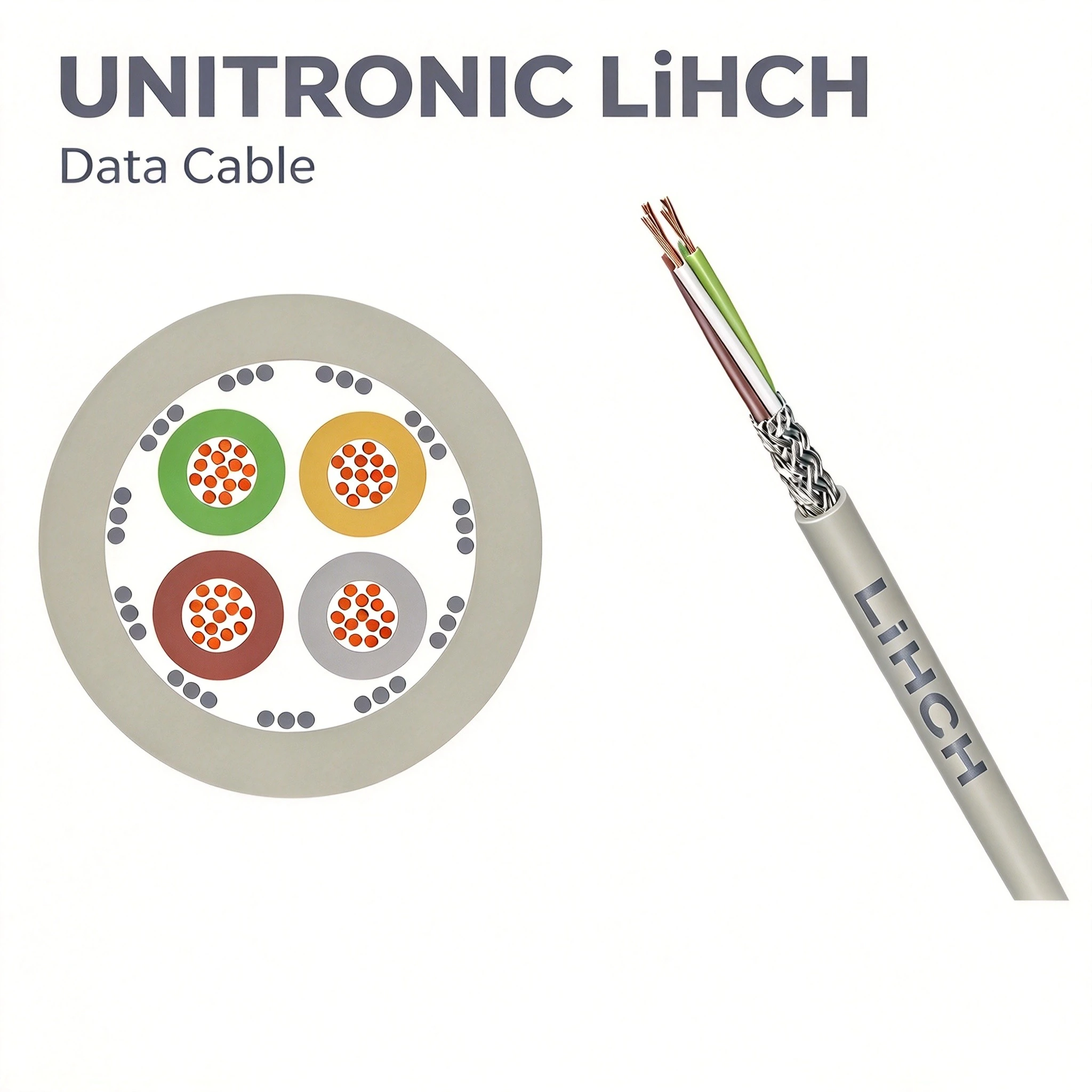
First, let’s get clear on exactly what each of these connectors is, because the terminology can trip you up fast. A molded connector, as our team defines it, is a unit where the connector shell, pins, and cable are all bonded together in a factory setting. You can’t take it apart later; it’s a single, integrated piece. For example, when we manufacture a temperature sensor cable for a food processing line, we don’t just crimp a connector on manually at our facility. We use overmolding technology to melt plastic directly around the cable’s insulation and the connector’s backshell, creating a watertight, airtight seal that’s uniform every single time. A field-installable connector, by contrast, is made up of separate parts: you get a connector shell, crimp pins, a strain relief, and instructions that tell you to assemble it on-site, right where you’re installing the sensor. You strip the cable, crimp the pins, thread them into the shell, and tighten the strain relief to hold it all together. That might sound simple, but it’s very different from trusting a factory process that’s controlled, tested, and repeated thousands of times a week.
Let’s start with the most common pain point for molded connectors: flexibility. Early in my career, I sold a batch of molded connector cables to a packaging plant that was expanding its production line. The engineers loved the molded design for their washdown stations—until they realized they had 10 extra sensors and needed to add a new run halfway through the line. The packaging was already up, they couldn’t pull whole sections of cable to install new connectors, and the molded connectors we supplied were only made for 2-meter lengths. It cost them an extra $1,800 in emergency labor and custom-made molded adapters just to make a 6-meter cable on-site. That’s the first big question: how precise is your project’s layout going to be? If you’re working from a set blueprint that’s not going to change, and you know exactly how long each cable run needs to be, molded is a no-brainer. But if your layout is still evolving—like a factory expansion, a temporary sensor deployment, or a retrofit where you’re adding sensors to old equipment that doesn’t have standardized dimensions—field-installable gives you the ability to cut and assemble cable to length on the spot. I’ve seen team leads save entire projects by having a bag of field-installable connectors in their toolbox, ready to use the second they realize a run is 1.2 meters instead of the 1-meter they ordered.
But flexibility comes with a big catch: human error. Let’s go back to that same packaging plant, but flip the scenario. Six months later, their maintenance team was doing a routine check of their conveyor sensors. One of the electricians had installed a field-installable connector a year earlier, and when they pulled it off, the strain relief had slipped. The cable insulation was frayed, and water had gotten into the pins. That sensor had been giving bad temperature readings for three months, leading to 12 hours of spoiled product runs. Why? Our field-installable connectors come with a clear step-by-step guide, but not every maintenance tech reads the fine print. They cut the cable too short, crimped the pins at the wrong tension, or didn’t tighten the strain relief enough. Molded connectors eliminate that risk entirely because there’s no assembly step. The seal is made in a temperature-controlled mold, tested for ingress protection (IP) ratings, and guaranteed to be consistent. For applications where failure isn’t an option—like medical device manufacturing, food and beverage processing, or hazardous environments where water or dust can cause explosions—molded is the only responsible choice. I’ve also seen this with outdoor sensor deployments: a customer installing soil moisture sensors on a farm tried field-installable connectors once, and half of them failed the first winter when the cold made the rubber seals crack from improper assembly. Switching to molded cut their failure rate to zero that same year, and their downtime dropped by 40%.
Next up: cost, which is almost always the first question customers ask. But don’t fall for the trap of only looking at the upfront price of the connector itself. A molded connector is more expensive per unit at the time of purchase. Our field-installable connectors cost about 30-40% less than a comparable molded connector, for example. But that’s just the initial cost. Let’s break down the hidden costs. For every field-installable connector you assemble, you need the tools: a crimping tool, a wire stripper, a torque wrench for tightening the shell, and test equipment to make sure the connections are good. Those tools can run you $500-$1,000 for a basic set, and more if you’re working with specialty cables like shielded sensor pairs. Then there’s labor. For someone who’s done this a hundred times, assembling a field-installable connector takes 5-10 minutes. For someone who’s never done it, it takes 30, and there’s a high chance you have to redo it. I calculate that for a project with 50 connectors, the average labor cost for field-installable is $15 per connector, plus $200 in tools, versus molded connectors at $25 per unit, no tools needed and no labor for on-site assembly. Add in maintenance and repairs: a field-installable connector that fails needs to be redone on-site, which costs travel time, labor, and the cost of the connector. A molded connector, if it fails, is usually a factory defect, covered under warranty, and we ship a replacement fast. For projects with 100+ connectors, that difference adds up fast. Last year, a wind farm client told us that over two years, their field-installable connectors cost them $12,000 in repairs and labor, versus the $9,000 extra they would have paid for molded connectors—saving them $3,000 in total, and eliminating 20 hours of downtime.
Wait, but what about shielded cables? That’s a big one for sensors, because noise interference can completely throw off readings. If you’re using unshielded sensor cables, this is less of a concern, but for industrial environments with heavy machinery, VFDs, or high-voltage equipment, shielded is non-negotiable. Molded connectors have a huge advantage here: when we overmold a shielded connector, we create a continuous ground connection between the cable’s shield and the connector shell. That means there are no gaps or loose strands that can cause interference. With field-installable connectors, the ground connection relies on how well you crimp the shield to the pin or the shell. If you don’t pull every stray strand of shield wire tight, or if the crimp is too loose, you’ll get noise that makes your sensor readings inconsistent. I’ve had multiple clients come to us after buying cheap field-installable connectors that had random 10% fluctuations in their temperature readings, only to switch to molded and see those fluctuations disappear entirely. If your sensor’s accuracy is critical, that’s a make-or-break point.
But let’s not act like molded connectors are always the right call, even in industrial settings. There’s a use case I see all the time: temporary installations or test setups. For example, a research lab testing a new water quality sensor in a river might need 5 different cable lengths over the course of a month, and they don’t want to commit to buying 10 molded cables in different lengths that might not work for their next test. Field-installable connectors let them buy a bulk spool of cable and a pack of connectors, and cut exactly what they need each time. That flexibility is irreplaceable for small, one-off projects. Also, if your team is already trained to work with field-installable connectors—like an in-house electrician who does this every day at their plant—there’s no reason to add the complexity of molded. If your maintenance team knows how to assemble a connector correctly, and your project doesn’t have strict IP or safety requirements, field-installable can save you time and money without any downsides.
Another factor: replacement parts. What happens if a connector breaks mid-project? If you’re using molded connectors, you can’t just replace a single part—you have to replace the whole connector and the cable end, which might mean cutting a section of cable if it’s already installed. With field-installable, you just have a bag of spare connectors on hand, and you can swap it out in 10 minutes. That’s a huge win for remote sites, like a pipeline monitor or a solar farm, where waiting for a replacement molded connector to ship could mean a day or two of downtime. I’ve had clients in rural areas tell me that having field-installable spares on hand was the difference between a 1-hour repair and a 3-day outage when a connector got damaged by a storm.
Let’s sum this up with a framework I use with every customer, because the choice isn’t binary—it’s based on 5 key questions. First: What is your application’s failure tolerance? If a bad connector can cause safety risks, product spoilage, or expensive downtime, molded is non-negotiable. If a failed connector just means a minor delay, field-installable is fine. Second: How flexible does your cable layout need to be? If you know every length from the start, molded. If your layout could change at any point, field-installable. Third: What’s your total cost of ownership, not just upfront price? Add up tool costs, labor, repair costs, and downtime, not just the per-unit price of the connector. Fourth: Are you working with shielded cables? If interference is a risk, molded’s consistent shield connection will almost always give better results. Fifth: How trained is your installation team? If your techs are experienced with field assembly, go for field-installable. If they’re new, or the project is high-stakes, molded is the safer bet.
At the end of the day, as a Sensor Cables supplier, our job isn’t to push one product over the other—it’s to give you the information to make the call that’s right for your specific project. We’ve seen projects that saved 20% by going with field-installable, and others that saved 50% by going with molded. There’s no one-size-fits-all answer, but taking the time to work through these questions will help you avoid the common pitfalls that trip up so many teams. If you’re currently planning a sensor cable deployment, and you’re still not sure which option will work best for you, we’d be happy to walk through your project details, share real-world case studies from similar deployments, and help you put together a cost-benefit analysis that fits your goals. Don’t let a last-minute connector choice turn into a long-term headache—reach out to our team today to discuss your needs.
HELUKABEL Control Cables References:
- Industrial Ethernet Connector Standard, International Electrotechnical Commission (IEC) 61076-2-101
- Ingress Protection (IP) Rating Guidelines, National Electrical Manufacturers Association (NEMA) 250
- Shielding Effectiveness Guidelines for Industrial Sensor Cables, Institute of Electrical and Electronics Engineers (IEEE) 1455-2015
- Field Assembly vs. Factory-Molded Connector Reliability Study, Sensor Industry Association, 2022
- Total Cost of Ownership Analysis for Industrial Connectivity, Manufacturing Extension Partnership (MEP), 2023
Xiamen Kabasi Electric Co., Ltd.
Xiamen Kabasi Electric Co., Ltd. is one of the most professional sensor cables manufacturers and suppliers in China. With abundant experience, we are committed to providing high quality customized cables with competitive price. Please feel free to buy the newest sensor cables in stock here and get quotation from our factory.
Address: Third Floor, Building 6, Baochen Science and Technology Park, No.15 Dongfu West Road 2, Xinyang Street, Haicang District, Xiamen, China
E-mail: sale3@kabasi.cn
WebSite: https://www.kabasicable.com/
