If you’ve ever stood in our warehouse, running a hand over the rows of sealed lead-acid batteries waiting to ship to local garages, off-grid cabin builders, and construction crews, you’ve probably heard one of our sales team toss around the term “reserve capacity.” At first glance, it sounds like just another battery jargon term—something meant to confuse new buyers who just need a reliable power source for their truck or backup generator. But here’s the thing: reserve capacity isn’t just a buzzword. It’s the number that tells you, in real, practical terms, how long your battery will keep powering what matters when the grid goes down, or when you’re stuck on a remote worksite with no way to charge. As a lead-acid battery supplier who’s been in this game for over a decade, I’ve seen too many customers undersize their batteries because they skipped checking the reserve capacity rating, and too many more overpay for features they’ll never use. Today, I want to break this down like I do for every first-time client who walks through our door, no stuffy technical manuals required. Lead-Acid Battery
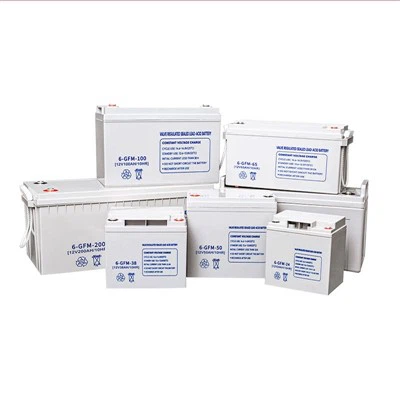
Let’s start with the basics, because you can’t understand reserve capacity until you understand how lead-acid batteries store and release power. All batteries have two key performance ratings most people know: amp hours (Ah) and cold cranking amps (CCA). Amp hours are the total amount of charge a battery can deliver over time, right? A 100 Ah battery, for example, should, in theory, put out 1 amp of power for 100 hours, or 10 amps for 10 hours. That makes sense for things like deep-cycle trolling motors or solar bank batteries. But CCA is for the quick burst of power you need to start an engine—your car, your generator, a skid steer—something that needs a huge jolt of current in a matter of seconds. Those two ratings are critical, but they only tell part of the story. That’s where reserve capacity comes in.
Reserve capacity (often shortened to RC) is defined as the number of minutes a fully charged lead-acid battery can deliver a steady 25 amps of power at 80 degrees Fahrenheit (26.7 degrees Celsius) before its voltage drops below a safe, usable level—1.75 volts per cell, or 10.5 volts for a standard 12-volt battery. Let me repeat that, because the temperature and load here matter a lot, and that’s where a lot of manufacturers fudge their numbers. It’s not minutes at whatever load you want, and it’s not a arbitrary room temperature; it’s a standardized test that lets you compare batteries apples to apples. For example, a 12-volt battery with an RC rating of 120 minutes means it can run 25 amps of power non-stop for two hours before it’s too depleted to use. If you’re running something that draws less than 25 amps, that time gets longer, and if you’re drawing more, it gets shorter—simple physics, but it’s easy to mix that up if you don’t know the test parameters.
Now, let’s get into why this matters so much, especially for someone relying on lead-acid batteries for real-world use. I once had a customer come to me last winter, panicking, because his backup generator died when a 12-hour snowstorm knocked out power to his rural Ohio home. He had bought a 12-volt generator battery with a 750 CCA rating—great for starting the generator, he thought—but he hadn’t checked the RC. When the power went out, his house needed about 15 amps to run the fridge, heater, and sump pump. That same battery only had an RC of 75 minutes. After an hour and 15 minutes, the voltage dropped too low, and the generator shut off, leaving his basement at risk of flooding. If he’d checked the RC, he would have known he needed a battery with at least 120 minutes of reserve capacity to cover a full 8-12 hour storm. That’s not a small mistake; it’s a costly one, and it’s entirely avoidable by paying attention to that RC number.
Another common scenario: off-grid cabins or remote construction sites. I work with a lot of small contractors who run power tools, lights, and a mini fridge on lead-acid batteries out in the middle of nowhere. They’ll come in saying they need a 100 Ah deep-cycle battery, but when I check, that 100 Ah battery might have an RC of just 90 minutes. If they’re running three power tools that draw 15 amps total, that 100 Ah battery will be dead in a few hours, not the 10 hours they thought. Reserve capacity lets you translate that Ah number into real, usable time for the specific load you’re running. That’s the value right there: it turns abstract capacity into something you can plan around.
Now, let’s clear up a common myth about reserve capacity: it’s not just for deep-cycle batteries. You’ll see RC ratings on both flooded lead-acid, AGM, and gel batteries—all the main types we supply here. For starting batteries (the ones in your car or truck), RC tells you how long you can drive on the battery alone if the alternator fails, before you’re stuck with a dead battery. For deep-cycle batteries, which are designed to be discharged and recharged repeatedly, RC is even more important because they’re built to deliver power over long stretches, not just quick bursts. AGM batteries, which are super popular for RVs and solar setups these days, often have higher RC ratings for their size than flooded batteries, because their design lets them deliver steady power more efficiently. But that’s a topic for another day; today we’re talking about reserve capacity across the board.
Wait a second, let’s circle back to that test standard, because it’s the most important part of understanding any RC rating. I mentioned earlier that RC is tested at 25 amps and 80°F, but that’s not the only way manufacturers can measure it. Some companies will list RC at a lower temperature, or a higher load, or even adjust the voltage cutoff to make their battery’s RC sound better than it actually is. That’s why when you’re comparing lead-acid batteries, you need to make sure the rating is to the industry standard set by the Battery Council International (BCI), the organization that sets most of the performance rules for batteries in North America. If a battery’s RC is only listed as 75 minutes but isn’t BCI-tested, that’s a red flag. Our batteries here are all tested strictly to BCI standards, so when we say a 12V battery has an RC of 120 minutes, you can trust that number—we don’t inflate ratings to make a sale, because we’d rather have a customer who comes back next year than one who swears off lead-acid batteries after a bad experience.
Let’s do a quick example to make this concrete for someone planning their power needs. Suppose you need backup power for your home during outages, and your critical loads are: a fridge (5 amps), LED lights and a modem (3 amps total), and a sump pump (7 amps). That adds up to 15 amps total, which is 10 amps less than the 25 amp test load for RC. How do you convert that to RC? Well, there’s a rough rule of thumb: for loads below 25 amps, you can estimate the reserve capacity will increase by roughly the ratio of the 25 amp load to your actual load. Wait, let’s test that: if 25 amps gives 120 minutes, then 15 amps would be (25/15) * 120 = 200 minutes. That’s roughly 3 and a half hours. But if your power outage usually lasts 8 hours, you’d need two batteries in parallel, right? Or a battery with an RC of at least 450 minutes (7.5 hours * (25/15)) to cover that. That math works for most lead-acid batteries, and it’s a good starting point for planning. Of course, there are variables—temperature, age of the battery, how much you’ve discharged it before—but that’s a solid baseline.
Now, you might be wondering, what’s the difference between reserve capacity and amp hours, anyway? Let’s use the same 100 Ah battery as before. A 100 Ah deep-cycle lead-acid battery will usually have an RC of around 180 minutes (3 hours) at the 20-hour discharge rate, which is the standard for Ah ratings. Wait, that’s a big difference from the 25 amp RC rating. Oh right, because Ah is measured at a much slower discharge rate—usually 0.05C, meaning you discharge the battery over 20 hours. So a 100 Ah battery discharged at 5 amps over 20 hours will deliver 100 Ah. But reserve capacity is at a much faster discharge rate, 25 amps, so it’s a different measurement entirely. That’s why you can’t just convert RC to Ah directly, and vice versa—they’re two different tests for two different use cases. Amp hours tell you about long, slow power delivery; reserve capacity tells you about steady, medium-speed power delivery, which is exactly what you need for backup power or running power tools.
As a supplier, I’ll be the first to tell you that no single battery rating is the only thing you need to look at. You need CCA for starting power, Ah for deep-cycle use, and reserve capacity for planning how long that power will last when you’re running your critical loads. But reserve capacity is the most underrated of the three, because it’s the only one that tells you exactly how long you can rely on that battery when the going gets tough. I’ve had customers call us in a panic at 2 a.m. after a storm, and nine times out of ten, they skipped checking the RC when buying their battery. They bought based on CCA because they thought “more cold cranking amps = better battery,” but that’s only true if all you’re doing is starting an engine. If you need to keep your house warm, your food cold, and your pumps running, RC is king.
Let’s also talk about how reserve capacity changes over a battery’s life, because that’s another thing customers don’t always consider. A brand new lead-acid battery will have its full rated reserve capacity, but as it ages, as you cycle it (charge and discharge it) regularly, and as you don’t maintain it properly, that RC will slowly drop. For example, a battery that’s 5 years old might only have 70% of its original RC, even if it passes a voltage test. That’s why it’s important to not just check the RC when you buy the battery, but to test it periodically, especially for backup batteries that sit unused most of the year. We recommend testing the reserve capacity of your backup lead-acid battery every 6 months to make sure it’s still holding up to spec—no one wants to be caught with a dead battery when they need it most.
Now, if you’re reading this and thinking, “Okay, that makes sense, but how do I pick the right reserve capacity for my needs?” That’s the question we help customers answer every single day at our warehouse, and we’re happy to walk through it with you. The first step is to list all the critical loads you need to power during an outage or on a worksite, add up their total amperage draw. Then, decide how long you need that power to last—2 hours for a typical short outage, 12 hours for a severe winter storm, 24 hours for a remote worksite with no charging access. Then, use the rough formula we talked about earlier: (Total Amps Needed * Hours Needed * (25 / RC Test Load)) = Minimum RC Rating. Or, better yet, send us a list of your needs, and we’ll run the numbers for you, factoring in if you have a starting load or a deep-cycle load, what type of battery you prefer (flooded, AGM, gel), and your budget. We don’t push the most expensive battery just because we get a better commission—we push the one that’s right for your needs, because we know that if our customers are happy, they’ll come back, and they’ll refer their friends.
I’ll be honest, the lead-acid battery industry has gotten a bad rap over the last few years, with all the talk of lithium-ion batteries that have higher capacity, longer life, and lighter weight. And lithium is great for a lot of applications, but lead-acid is still the workhorse for most people—its cheaper upfront, easy to maintain, and proven to work in extreme temperatures. But a lot of that bad reputation comes from people buying the wrong battery for their needs, like ignoring reserve capacity and getting stuck with a battery that dies when they need it. That’s why we focus so much on teaching our customers about reserve capacity, because it’s the number that turns a generic battery into a reliable power source.

At the end of the day, lead-acid batteries are a simple, robust technology that’s been around for over 150 years, and they’re not going anywhere anytime soon. But to get the most out of your lead-acid battery, you can’t just look at CCA or Ah—you have to understand reserve capacity, because that’s what tells you how long you’ll actually have power when the grid goes down, or when you’re 100 miles from the nearest charging station. If you’re not sure what reserve capacity you need for your next battery, or if you’re shopping around and want to compare our batteries to others, reach out to our team. We don’t use fancy sales scripts or inflated ratings—we tell you exactly what you’re getting, because that’s how we’ve done business for over a decade, and that’s why our customers keep coming back year after year.
EV Charger References:
Battery Council International. (2021). Battery Performance Rating Standards for Reserve Capacity and Amp Hour Testing. BCI Technical Manual, 12th Edition.
US Department of Energy. (2022). Lead-Acid Battery Applications for Backup Power and Off-Grid Use. DOE Office of Energy Efficiency and Renewable Energy Report.
Vazquez, G., & Blanco, C. (2019). Performance Degradation of Lead-Acid Batteries Under Cyclic Deep Discharge Conditions. Journal of Power Sources, 425, 119-127.
Shandong Yaoqian Energy Storage International Trade Co., Ltd.
We’re well-known as one of the leading lead-acid battery manufacturers and suppliers in China, featured by quality products and good price. Please rest assured to buy customized lead-acid battery made in China here from our factory.
Address: Lithium Battery Industrial Park, Xingcheng Street, Zaozhuang High-tech Zone, Shandong Province, China
E-mail: business@yaoqiansmart.com
WebSite: https://www.yaoqiansmart.com/
