If you’ve ever worked in industries like oil and gas, mining, chemical processing, or even water treatment, you’ve probably seen those compact, self-contained units bolted to skids—you know, the ones that look like pre-built mini-plants all ready to drop into a job site. As someone who’s been supplying skid mounted equipment for over a decade, I get it: when a client first reaches out, their main questions usually boil down to, “Can you build this?” and then, “Will this thing pass all the regulations when it’s installed?” That second part is make-or-break. I’ve seen projects get delayed for months because a skid missed a tiny regulatory checkbox, and I’ve also delivered units that cleared inspections on the first try. So let’s break down what actually matters when it comes to the rules for skid mounted gear—no stuffy jargon, just the real stuff I deal with day to day. Skid Mounted
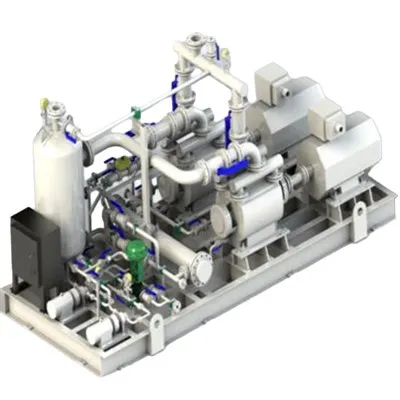
First, let’s start with the basics: what is a skid mounted unit, anyway? For the uninitiated, it’s a pre-fabricated assembly of pipes, pumps, valves, controls, and even small process equipment all mounted on a heavy steel frame (the “skid”) for easy transport. They’re a huge upgrade from building equipment on-site—faster install, less waste, easier to move if your project shifts locations. But because they’re often part of larger industrial operations, regulations don’t just apply to the end facility; they apply to the skid itself, because it’s a complete, functional system when it leaves your shop.
The biggest difference I’ve noticed is that rules aren’t one-size-fits-all. A skid for a refinery in Texas has to meet different standards than one for a chemical plant in Alberta, or a water treatment facility in Germany. But there are a handful of core regulatory bodies that most industries and regions refer to, so let’s cover those first.
First up: OSHA (Occupational Safety and Health Administration) in the U.S. That’s non-negotiable for any skid that ends up stateside. OSHA’s rules cover everything from electrical safety on the skid to guardrails for moving parts, fire protection, and even how much weight the skid’s frame can support. I once had a client ask me to cut corners on the frame’s steel gauge to save a few bucks—turns out OSHA has a standard for structural integrity of equipment skids, and that would’ve been a dealbreaker. We had to swap to a thicker frame, added a few extra cross-beams, and it cost the client a little more upfront, but they didn’t have to redo it later. Also, OSHA’s Lockout/Tagout (LOTO) rules matter a lot here. Every skid needs clear, accessible lockout points so workers can shut down the equipment safely for maintenance. I used to think “oh, that’s obvious” until a client’s inspector pointed out we’d hidden the lock box behind a pipe—fixed that right away, and now it’s one of the first things we check in our own shop inspections.
Next, for process industries in the U.S., there’s API (American Petroleum Institute) standards, specifically API Standard 650 for storage tanks if your skid has tanks, API 676 for pumps, and API RP 500 for electrical classification in hazardous areas. Wait, hazardous areas are a big one—if your skid is handling flammable gases or liquids, the electrical components (motors, switches, control panels) can’t be regular off-the-shelf stuff. They have to be explosion-proof or rated for Class I, Division 1 or 2 locations, depending on how much vapor the skid is expected to release. I’ve had engineers come to me with “cheap” electrical parts that would’ve set off a red flag with the inspector, so I make it a point to coordinate with clients on hazardous area classification early on—saves everyone a headache later.
If you’re outside the U.S., especially in the EU, it’s the Machinery Directive (2006/42/EC) that’s key. That directive lays out safety requirements for all machinery sold in the EU, including skid mounted units. It covers things like risk assessment, emergency stop functionality, documentation for the end user, and CE marking. CE marking isn’t just a sticker—it’s proof the skid meets all the essential health and safety requirements. A lot of international clients don’t realize that, so when they order a skid from a U.S. supplier, they have to make sure it’s either compliant with Machinery Directive or they’ll have to do a lot of rework once it gets to their facility. I recently worked with a mining company in Poland that almost missed a deadline because their first skid didn’t have the required risk assessment documentation—we added that to our process for EU-bound units, and now it’s part of our standard pack.
Then there’s the environmental side. Regulations don’t just care about worker safety—they care about what the skid leaks or emits. In the U.S., that’s EPA (Environmental Protection Agency) rules, like the Clean Water Act and Clean Air Act. If your skid handles wastewater, you have to make sure it has no unapproved leaks that would get into local water sources. For air emissions, if the skid has vents that release volatile organic compounds (VOCs), they need to be filtered or controlled to meet EPA limits. I once supplied a skid for a produced water treatment project in Oklahoma—we almost shipped it without a vapor recovery unit for the vents, and the EPA inspector would’ve failed it. Now we include a basic vapor recovery unit as standard for oil and gas skids in that region, just to avoid that mistake.
Across industries, there’s also pressure vessel regulations, which might sound boring but are super important. If your skid has a pressure vessel (like a reactor, a storage drum, or a heat exchanger), you can’t just weld it up in your shop. It has to be designed, fabricated, and tested to a recognized code—like ASME Boiler and Pressure Vessel Code (ASME BPVC) in the U.S., or PED (Pressure Equipment Directive) in the EU. I’ve seen small suppliers cut corners here, using untested steel for pressure vessels, and that’s a disaster waiting to happen. We do hydrostatic testing on every pressure vessel on our skids—filling them with water at 1.5 times their maximum operating pressure—to make sure there are no leaks or weak spots. That’s non-negotiable for us, even if it adds a day or two to the build time.
Wait, what about transportation regulations? A lot of people forget that skid mounted equipment has to meet rules for moving it from your shop to the job site, whether that’s over the road, by rail, or by sea. In the U.S., DOT (Department of Transportation) has rules on the maximum dimensions and weight for over-the-road transport. If your skid is too long or too heavy, you need permits, special hauling equipment, and sometimes escorts. I had a client in North Dakota order a huge process skid that was 12 feet wide—standard over-the-road width is 8.5 feet, so we had to add retractable guardrails to meet DOT rules for wide loads. That was a extra step, but it meant the client didn’t have to deal with permit headaches on their end. For international shipments, like to Australia, there’s IMdg Code (International Maritime Dangerous Goods) rules if the skid has hazardous materials, so we have to properly label and package those components to meet shipping regulations too.
Now, here’s the thing: as a skid supplier, it’s not just about building a unit that works—it’s about making sure it complies with all these regulations before it leaves our facility. That’s why we don’t just hand over the skid and a drawing; we provide a whole set of documentation that the inspector, end user, or regulatory body will need. That includes design calculations, material test reports, inspection reports, compliance certificates, and operation and maintenance manuals. I’ve seen other suppliers skip this part, and it’s the number one reason skids get held up at inspection. We make this documentation part of every order—no extra charge, no extra work for the client.
But wait, are there exceptions? Sometimes, if a skid is a “custom” unit for a small operation, but even then, the basic rules still apply. For example, a small skid for a farm’s water injection system still needs to meet basic OSHA electrical safety rules, right? And if it’s handling flammable fuel, it still needs to meet local fire code requirements. The key is to communicate with your supplier early on about where the skid is going, what it’s doing, and any specific regulations the end user follows. That way, we can design and build it right the first time.
I’ve also learned that regulations change all the time. Five years ago, the EPA’s VOC limits were different than they are now, and we had to update our skid designs to meet the new rules. That’s why it’s not enough to just know the current standards—we have to stay up to date on changes. We attend industry conferences, follow updates from OSHA, API, and other bodies, and even work directly with inspectors sometimes to make sure our processes are on track. That’s something a lot of new suppliers skip, and it leads to non-compliant units.
Another common mistake I see clients make: assuming all skids are the same. A skid for a pharmaceutical plant has totally different regulations than one for a mining site. Pharmaceutical skids have to meet FDA (Food and Drug Administration) rules, like good manufacturing practices (GMP), because the equipment is handling materials that go into drugs. That means the skid’s materials have to be easy to clean, no crevices where bacteria can grow, and the controls have to be documented to track every step of the process. I worked on a pharmaceutical skid a couple years back, and we had to use stainless steel with a 2B finish instead of carbon steel, because the FDA wouldn’t approve carbon steel for that application. That’s a big difference in materials, but it’s required.
So let’s wrap this up. The regulations for skid mounted equipment aren’t just a list of hoops to jump through—they’re there to keep workers safe, protect the environment, and make sure the equipment works as intended. As a skid supplier, our job is to make sure your unit meets all the right rules, no matter where it’s going or what it does. That means knowing the core standards (OSHA, API, Machinery Directive, EPA), coordinating with you on your specific project needs, and providing all the documentation you need to get it inspected and installed without delays.
If you’re working on a project and need a skid mounted unit that checks every regulatory box, don’t waste time dealing with suppliers who cut corners on compliance. Reach out, and we can walk through your project, talk through the specific regulations that apply, and make sure we build a unit that’s ready to go the second it arrives on site. No surprises, no delays, just compliant equipment that works.
Gate Valve References:
- OSHA Standards for Skid-Mounted Machinery and Equipment
- API Standard 650: Welded Tanks for Oil Storage
- EU Machinery Directive 2006/42/EC
- EPA Clean Water Act Regulations for Industrial Equipment
- ASME Boiler and Pressure Vessel Code, Section VIII
Yancheng Suhao Valve Industry Co., Ltd.
We are one of the most experienced skid mounted manufacturers and suppliers in China, specialized in providing high quality customized service. Please feel free to wholesale durable skid mounted in stock here from our factory. Also, quotation is available.
Address: No. 33, Huashan Road, Economic Development Zone, Funing County, Jiangsu Province
E-mail: Support@suhao.net
WebSite: https://www.suhaoind.com/
