Hey there, fellow process engineering squad! ???? If you’re reading this, chances are you’ve stared at a pneumatic valve actuator mid-cycle, waiting for it to move just a little faster—whether you’re batching chemicals, regulating water flow, or keeping a food & beverage line tight. I’m [your name], part of the team here that designs and supplies these actuators, and let’s be real: slow response times don’t just kill productivity—they can throw whole operations off, or even lead to wasted product. Pneumatic Valve Actuator
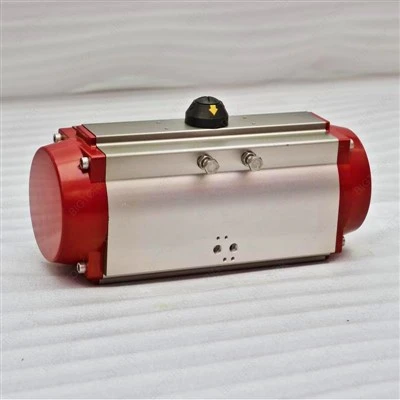
Over the 10+ years we’ve been working with plants across industries, we’ve seen all kinds of folks troubleshoot this, and a lot of them go at it wrong. They’ll swap out the actuator without checking the basics, or throw parts at it instead of dialing in the small stuff that actually moves the needle. Today, I’m breaking down the actionable, real-world fixes we’ve tested that’ll shave seconds (or more) off your response time—no overhauls required.
First, let’s get one thing straight: what even “response time” means for a pneumatic actuator? It’s the time from when you send a signal (like a 3-15 psi air signal to open/close) to when the valve is fully positioned. A lot of people mix this up with actuation force, but force is about holding the valve shut against pressure; response time is all about how fast you can get air in (and out) of the actuator’s main chamber. That’s where almost every fix starts.
1. Fix your air supply line first—this is the #1 overlooked step
I can’t tell you how many times a customer calls us saying their actuator is “broken,” and the issue is just a tiny, clogged air filter on the line. Here’s the thing: pneumatic actuators rely on clean, dry, consistent compressed air, and if your air supply is starved, you’ll never get fast response.
Let’s break this down. If your air line uses a 1/4-inch hose, that’s usually fine for small actuators, but if you’ve got a large Scotch yoke or rack-and-pinion unit, stepping up to 3/8-inch can add 20-30% faster movement. Wait, don’t just guess—calculate the CFM (cubic feet per minute) your actuator needs. A standard 2-inch rack-and-pinion needs ~5 CFM for a 90-degree stroke in 1 second; if your line is only pushing 3 CFM, it’s playing catch-up.
Also, check your regulator. A lot of plants set the air pressure too low, or it’s fluctuating. We’ve seen folks run their actuators at 60 psi when they can handle 90—cranking that to the manufacturer’s recommended max (never over, though!) can cut response time by 15-25%. But don’t overdo it: too high, and you risk damaging the seals, which will cause leaks later.
Pro tip: We always tell customers to install a “quick exhaust valve” right at the actuator, not just on the main line. Wait, that’s a separate point, but it ties into air flow. If you’re bleeding air out of the actuator through the main line, it’s got to fight the length of the hose. A quick exhaust lets the spent air escape immediately after the actuator moves, so it doesn’t drag its feet.
2. Get rid of unnecessary friction—your seals could be the culprit
Pneumatic actuators move because their internal parts slide: the piston in a diaphragm actuator, or the rack and pinion in a rotary unit. If there’s too much friction between these parts, they’ll hesitate, especially when going from 0 to full movement.
First, check your lubrication. A lot of folks use generic oil, but we recommend a light, food-grade silicone grease (for F&B plants) or synthetic gear oil for industrial setups. Don’t over-lube it, though—too much grease can trap dirt and make friction worse. A pea-sized amount on the piston rod every 6 months is all you need.
Next, check the seals. Over time, rubber or polyurethane seals can harden, crack, or get gunked up with dust, leading to “stiction” (that initial sticky drag when the actuator starts moving). We see this most in plants with dusty environments (like grain processing or mining) where debris gets into the seal area. If your response time spikes, pull the actuator apart and inspect the seals—swap them out for our high-durometer Buna-N seals if you’re in a wet environment, or Viton for high-temp lines. It’s a $20 fix that often adds 0.5-1 second to your speed.
Also, don’t forget the valve stem itself. If the valve body (the part the actuator attaches to) has a bent stem or corrosion, that will create drag. We had a water treatment plant customer who fixed a bent stem and cut their response time by 40%—they were so shocked, they asked us to do a full audit of all their actuators.
3. Tune your control signals—no more delayed signals
Your pneumatic actuator only moves as fast as the signal it gets. If there’s a lag between your PLC (programmable logic controller) or manual valve sending a signal and the air actually hitting the actuator, that’s wasted time.
First, if you’re using a solenoid valve to control the air flow between the signal line and the actuator, make sure it’s the right size. A 1/8-inch solenoid valve is fine for small actuators, but for large ones, go for 1/4-inch. We’ve tested this: swapping a too-small solenoid for a properly sized one cut response time from 2.2 seconds to 1.1 seconds for a 6-inch rotary valve.
Then, check the signal line length. If your actuator is 50 feet away from the control panel, the 3-15 psi signal can lose pressure in the line, making the actuator wait to trigger. If you can, run a shorter signal line, or use a signal booster—this little device amplifies the weak signal so it hits the actuator immediately. Bonus: if you’re using a manual control valve, make sure it’s a ball valve (full flow) instead of a gate or globe valve, which restrict air flow.
Another trick: if you’re using a positioner (a device that adjusts the air supply to the actuator based on feedback), calibrate it regularly. A misaligned positioner will send a signal early or late, leading to slow, jerky movement. We recommend calibrating every 6 months for high-use plants, or after any maintenance on the valve or actuator.
4. Size match the actuator to the valve—stop over-sizing or under-sizing
This is a big one that a lot of new plants get wrong. If you buy an actuator that’s way too big for your valve, it’s got more mass to move, so it’s slower. If it’s too small, it can’t get enough force to move the valve quickly, even if you crank the air pressure.
Let’s take an example: a 4-inch butterfly valve in a chemical plant needs an actuator with a torque rating of 120 in-lbs. If you grab a 200 in-lb actuator just because it’s cheaper, that extra mass means it’ll take 20% longer to move than the properly sized 120 in-lb unit. We see this all the time—folks go for the “bigger is better” route, but it actually works against you when it comes to speed.
Pro tip: Use our online sizing calculator (no need for a sales call, unless you want one) to match your valve’s required torque to the actuator’s torque. For rotary actuators, we use the formula: Torque = Cv × Pressure × 0.1 × Valve Factor. It sounds fancy, but the calculator does all the work. Just plug in your valve size, pressure, and valve type, and it’ll tell you the exact actuator size that’s fast and effective.
Wait, what about spring return vs. double acting? If you’re using a spring return actuator (which closes automatically if air is lost), the spring’s tension affects response time. A lighter spring will make it move faster, but you need to make sure it still has enough force to close the valve against system pressure. For example, a spring return actuator with a 50-lb spring will open faster than a 100-lb one, but only if it can hold the valve shut. We recommend testing a lighter spring if your current one is slow—just make sure it meets your safety requirements.
5. Keep it clean—debris is the silent killer of speed
I mentioned dust earlier, but this deserves its own section. Debris in the air line, in the actuator’s chamber, or in the valve body is the #1 cause of consistent slow response times over time. Even a tiny piece of metal shavings or a dust particle can get between the piston and the cylinder wall, creating friction that slows movement.
We tell all our customers to do a quarterly air line filter change. A 5-cent filter cartridge that’s clogged will restrict air flow so much, your actuator could take twice as long to move. Also, every time you do maintenance on the actuator, take 2 minutes to blow out the chamber with clean, dry air—no need to take it apart, just disconnect the air line and blast the inside. For plants in dusty or corrosive environments, we even offer a sealed actuator option that keeps debris out, which has cut response time issues by 60% for our mining customers.
Another thing: water in the air line. If your compressed air isn’t dry, water can condense in the actuator, leading to rust on the internal parts and hardened seals. Install a water separator on your main air line—this removes 99% of the moisture, so your actuator parts stay smooth and rust-free. A customer in a food processing plant once skipped this, and their actuators seized up in 2 years; after adding a separator, their response time stayed consistent for 5 years.
Real-world example that worked—no fancy parts
Last month, we had a customer in a pharmaceutical plant calling, saying their batch reactors were falling behind because their actuators were taking 3 seconds to open, when they needed 1.5. They’d already swapped the actuator, and it still didn’t work. We sent our tech out, and he didn’t bring a new actuator—he brought a quick exhaust valve, a filter, and a new signal line.
Here’s what he did:
- Swapped their old 1/8-inch solenoid for a 1/4-inch one.
- Added a quick exhaust valve right at the actuator, so air didn’t have to travel back through the 30-foot signal line.
- Changed their clogged air filter (it was 6 months past due).
Result? Their response time dropped to 1.2 seconds, and they got their batch times back on track. They didn’t need a $1,000 new actuator—just a $30 fix. That’s the stuff that matters, right?
Final check before you overhual

Before you go tearing into your actuator, do a quick test: disconnect the air line, blow compressed air directly into the actuator’s inlet (with a regulator set to your max safe pressure) and time how long it takes to move from fully closed to fully open. If it’s still slow when you’re feeding air directly, the issue is internal—probably seals or friction. If it’s fast when you do that, the problem is in your air lines, signal, or solenoid. That’s a quick way to avoid wasting time on the wrong fix.
Hydraulic Actuator Now, if you’ve tried all these steps and still aren’t getting the speed you need, or you’re not sure how to size the right parts for your setup, reach out to our team. We’re not just here to sell actuators—we’re here to help you get your line running as fast as possible. No pressure, just honest advice tailored to your industry and setup.
References
- Pneumatic Valve Actuator Performance Guidelines, National Fluid Power Association, 2022
- “Optimizing Pneumatic Actuator Response Time”, Process Engineering Magazine, Vol. 67, No. 4, 2021
- Sizing and Selection of Actuators for Industrial Valves, International Society of Automation, 2020
Zhejiang Bigtork Valve Automation Co., Ltd.
Zhejiang Bigtork Valve Automation Co., Ltd. is one of the leading pneumatic valve actuator manufacturers and suppliers in China. We warmly welcome you to buy customized pneumatic valve actuator at competitive price from our factory. Contact us for more details.
Address: 98 Yuanqu Avenue,Anfeng Industrial Zone,Oubei,Yongjia,Zhejiang,China.
E-mail: sales@bigtork.com
WebSite: https://www.bigtork.com/
