If you’ve ever toured a manufacturing facility, a chemical processing plant, or even a food and beverage production line, you’ve probably seen large metal drums lined up along walls, mounted to conveyor systems, or stored in climate-controlled bays. What you might not have noticed right away is the ring-shaped flange bolted to the top or bottom of many of those drums—and the housing that holds that flange securely in place. As a supplier of flanged drum housings, I get asked this question at least a few times a week: “What is a flanged drum housing, and why does it matter so much for our operations?” Let me break this down not just as a product, but as a critical piece of equipment that keeps entire production and storage lines running safely, efficiently, and compliantly. Flanged Drum

First, let’s start with the basics: a standard open-head steel drum is a cylinder, usually 55 gallons or smaller, with a removable top (called a bung) that lets you fill, empty, and access contents. But standard drums work for basic storage—pouring a chemical into a corner warehouse, moving a batch of raw material on a pallet—they fall short when you need to automate handling, prevent leaks, or meet strict industry regulations. That’s where the flange comes in. A flange is a flat, circular ring with evenly spaced bolt holes around its circumference; when it’s welded or attached to the top of a drum, it creates a rigid, consistent mounting point. A flanged drum housing is the component that secures that flange, aligns the drum for connection to other equipment, and seals the gap between the drum and whatever it’s attached to.
Think of it like a socket for a wrench: the wrench is your flanged drum’s top flange, and the socket is the housing that fits it, so you can turn the wrench to tighten or disconnect without slipping. But unlike a basic socket, housings are engineered for specific use cases. Let’s get into the science here, because that’s where the value lies. Most flanged drum housings are made from the same material as the drums they serve: carbon steel for industrial chemicals, stainless steel for food or pharmaceutical products, and even polyethylene for corrosive materials like acids or alkaline solutions. The material choice isn’t arbitrary—if you’re storing food-grade syrup, a steel housing will react with the sugar and contaminate the product, so you need a plastic or coated stainless steel housing. If you’re handling highly flammable solvents, you need a conductive steel housing to prevent static buildup that could spark an explosion.
The design of the housing also ties directly to function. For automatic drum handling systems—think conveyor lines that lift drums, empty them into processing tanks, or return them for reuse—the housing has to match the drum’s flange diameter (most common are 18-inch flanges for 55-gallon drums, but we make custom sizes for 30-gallon, 110-gallon, and even specialty drums for aerospace or nuclear applications). The housing’s inner rim is precision-machined to sit flush against the drum’s flange, and the bolt holes in the housing align exactly with the holes on the flange, so you can secure the drum without forcing it. That precision is key: if the holes are off by even a fraction of an inch, a drum won’t seat properly, leading to leaks, or worse, coming loose mid-conveyor and causing a hazardous spill.
Now, let’s talk about why this isn’t just a “metal ring” for manufacturing teams. I worked with a craft brewery in the Pacific Northwest last year that was struggling with their raw hop storage. They were using standard open-head drums for hop pellets, and every time they moved the drum to their milling line, some of the fine hop powder would leak out, wasting 8-10 pounds of hops per batch. They switched to flanged drums with our custom sealing flanges and housings, and the leak rate dropped to less than 1 pound per batch. The housing worked with a rubber gasket between the drum’s flange and the processing line’s inlet, creating an airtight seal that kept fine particulates from escaping—and also kept moisture out, which preserves hop freshness longer. That’s a real, tangible impact on their bottom line, not just a technical detail.
For chemical manufacturers, the stakes are even higher. OSHA and EPA regulations require that drums holding hazardous materials (like corrosive cleaners, flammable solvents, or toxic waste) be securely sealed and compatible with the equipment they’re connected to. A poorly fitted flanged drum housing can cause a drum to disconnect during transfer, spilling hazardous material into the environment, which can lead to fines, shutdowns, or even worker injuries. I had a customer in the automotive parts industry tell me they used a generic housing from a discount supplier a few years back, and a drum of engine degreaser fell off a conveyor line because the housing’s bolt holes were too small, leading to a spill that closed their plant for three days and cost $120,000 in lost production. That’s the difference between a mass-produced generic housing and a properly engineered flanged drum housing: reliability that keeps operations safe and compliant.
Another common question I get is: “Can’t I just weld a flange to a standard drum and call it a day?” The short answer is no. Welding a flange requires specialized training, and even a small weld flaw (like a pinhole or uneven heat) can create a weak point in the drum. Also, drums are typically designed for a certain pressure: standard 55-gallon drums can hold up to 15 psi of internal pressure for closed-head drums, but if you weld a flange to an open-head drum, you create a structural point that can fail if pressure builds. A flanged drum housing is tested to handle that pressure, along with the stress of being lifted, moved, and connected multiple times. We test every housing we make by pressure-testing it with water up to 20 psi, and we also do drop tests from 6 feet to make sure it can withstand accidental impacts during warehouse handling.
We also make specialty flanged drum housings for specific industries. For the pharmaceutical industry, we make 3-A compliant housings, which meet strict sanitary standards that require smooth surfaces with no crevices where bacteria can grow. These housings are easy to clean with sanitizers, which is a must for drums holding vaccine ingredients or injectable medications. For the nuclear industry, we make housings with radiation-resistant coatings that can hold up to long-term exposure to radioactive materials, so drums used for storing low-level waste don’t degrade over time. For agricultural applications, we make polyethylene housings that don’t react with fertilizers or pesticides, so raw material drums stay intact during transport from farm to processing plant.
I’ll be honest: when I first started in this business 12 years ago, I didn’t realize how underserved the flanged drum housing market was. Most drum manufacturers see the flange as an afterthought, a feature to add on for customers who need automation, not a core component. But over time, I’ve seen firsthand how a good housing can solve problems that seem impossible with standard drums. Take a customer in the solar panel industry, who needed to store and transport large batches of ethylene vinyl acetate (EVA) resin, a material used to make solar cell laminates. EVA is hygroscopic, meaning it absorbs moisture from the air, which ruins its ability to bond to solar cells. They were using sealed drums but struggling with moisture getting in through the top bung. We worked with them to create a flanged drum housing that included a airtight gasket and a desiccant breather valve, so the drum stayed dry even when it was opened multiple times over the course of a production run. That small addition cut their material waste by 15% in the first six months.
So, what should you look for when you’re choosing a flanged drum housing? First, match the housing to your drum’s specifications: diameter, flange type (interlocking or bolted), material, and any pressure requirements. If you’re using a 55-gallon 18-inch carbon steel drum, don’t buy a housing for a 30-gallon plastic drum—this is a common mistake that leads to leaks and failures. Second, look for a supplier that offers custom sizing if you need it. Not every operation uses standard drums, and a generic housing won’t work for specialty drums. Third, check for compliance with industry standards. If you’re in food, pharmaceutical, or hazardous materials, your housing needs to meet FDA, 3-A, OSHA, or EPA standards, depending on your location and industry.
At the end of the day, a flanged drum housing is more than just a piece of equipment—it’s a link between storage, processing, and safety. It’s the part that makes automation possible, that prevents waste, that keeps workers safe, and that helps companies stay compliant. I’ve built my business on understanding that link: every housing we make is designed to solve a specific problem for our customers, whether that’s reducing leak rates, cutting material waste, or meeting strict sanitary standards.
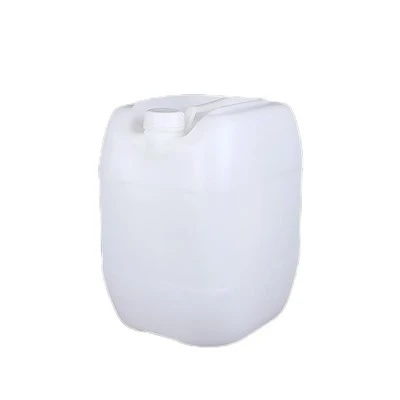
If you’re tired of generic flanged drum housings that let you down, or you’re looking to upgrade your drum handling system, we’re here to help. We work with facilities of all sizes, from small craft breweries to large chemical plants, and we can help you design a housing that fits your exact needs. Don’t hesitate to reach out to our team to discuss your requirements, get a custom quote, or ask any questions you have about flanged drum housings. We’re here to help you find the right solution for your operations.
Other Plastic Parts References:
- Occupational Safety and Health Administration (OSHA). "Hazard Communication Standard: Drums and Containment Vessels." 29 CFR 1910.1200, 2024.
- 3-A Sanitary Standards, Inc. "Standard Number 18-02: Equipment for Processing and Packaging Dairy Products and Foods." 2023.
- American Society of Mechanical Engineers (ASME). "Pressure Vessels and Drum Design Standards." ASME BPVC Section VIII, 2022.
- National Fire Protection Association (NFPA). "Flammable and Combustible Liquids Code." NFPA 30, 2024.
- Food and Drug Administration (FDA). "Food Contact Substance Notification (FCN) Program: Plastic Materials and Coatings." 21 CFR Part 177, 2023.
Jiangsu Xinhuasheng Packaging New Materials Co., Ltd.
Jiangsu Xinhuasheng Packaging New Materials Co., Ltd. is one of the most professional flanged drum manufacturers and suppliers in China, featured by quality products and low price. Please rest assured to wholesale durable flanged drum in stock here and get quotation from our factory. Customized orders are welcome.
Address: No.5 Tieta Road, Industrial Park, Guyang Town, Dantu District, Zhenjiang City, Jiangsu Province, China.
E-mail: 2122140183@qq.com
WebSite: https://www.xhsibc.com/
