If you’ve ever stopped to think about the plastic components that fit so seamlessly into our daily lives—from the tiny, precise cylinders that hold medication inserts to the thin-walled tubes used in cosmetics packaging—you might have wondered how manufacturers balance speed, precision, and wall thickness consistency. As the owner of an Automatic Plastic Cylinder Machine supplier, I get questions about this all the time: the most common one is, “Can your machines produce thin-walled cylinders?” The short answer is yes, but the long answer is rooted in how our equipment is engineered, the science of plastic processing, and why so many manufacturers turn to automatic systems for this specific task. Automatic Plastic Cylinder Machine
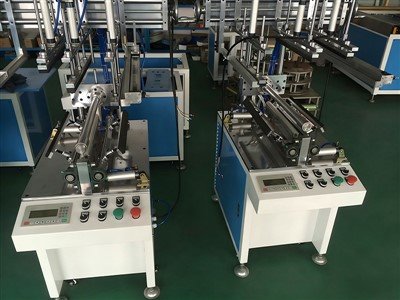
Let’s start with what a “thin-walled cylinder” actually means in industrial terms. For the sake of this discussion, we’re not talking about the flimsy, crumpled plastic tubes you’d get from a cheap party favor. We’re talking about components where wall thickness is often less than 0.5 millimeters, sometimes as little as 0.2 millimeters. These parts are rigid enough for their intended use, but light-weight, material-efficient, and require extreme precision in their dimensions. For example, a pharmaceutical cylinder that holds a liquid dosage of eyedrops needs walls thin enough to keep material costs low, but thick enough to resist cracking during transport and maintain a consistent seal. A cosmetic tube for lip gloss needs to be thin enough to squeeze easily, but not so thin that it leaks or collapses when placed in a purse.
For years, many manufacturers thought thin-walled production required custom, high-end equipment that was only feasible for large-scale operations. But that’s changed as automatic plastic cylinder machine technology has advanced. When I first entered this industry 12 years ago, thin-walled parts were mostly made with manual or semi-automatic systems that had long cycle times, high error rates, and required constant operator supervision. Today, our automatic machines are designed specifically to address these pain points, and we’ve helped hundreds of clients—from small startups to multinational packaging companies—produce consistent thin-walled cylinders at scale.
The key to making thin-walled cylinders with an automatic plastic cylinder machine lies in three core areas: material handling, mold precision, and process control. Let’s break each of these down, because this is where the science meets real-world results.
First, material handling. Not all plastics are created equal when it comes to thin-walled production. Most manufacturers use polypropylene (PP) or polyethylene (PE) resins for thin-walled cylinders, because these materials have good flow properties when melted. But even with the right resin, the way we feed and process the material in our automatic machines matters. Our machines use precision screw barrels that are calibrated to heat the resin evenly, without causing thermal degradation that would make the plastic brittle. When you’re working with walls that are 0.3mm thick, even a tiny amount of burnt or weakened plastic can cause a cylinder to crack during testing. The automatic system controls melt temperature within ±1°C, which is critical for maintaining consistent flow and preventing defects.
We also use dryers that are integrated directly into the machine. Moisture in plastic resin is another big enemy of thin-walled production. If resin absorbs moisture, it can create bubbles in the molten plastic, which lead to weak spots in the wall. Our automatic dryers bring resin moisture content down to less than 0.02%, a threshold that industry standards require for thin-walled parts. This is something manual machines struggle with, because operators often forget to monitor dryer settings or check resin moisture levels between runs—something that automatic systems do in real time.
Second, mold precision. The mold is the heart of any plastic cylinder machine, and for thin-walled parts, it has to be almost perfectly engineered. Our molds are made from high-grade steel, machined to tolerances of ±0.01mm, which is smaller than the width of a human hair. Why is that so important? When you inject molten plastic into the mold cavity, the material flows at high speed to fill the thin, narrow space of the cylinder walls. If the mold cavity is even slightly irregular, the plastic will fill unevenly, leading to walls that are thinner in some spots and thicker in others. Thicker walls add unnecessary material cost, and thinner walls are at risk of breaking or leaking.
Our automatic machines work with multi-cavity molds, too. A single machine can have 24, 36, even 48 cavities, depending on the cylinder size. That might sound overwhelming, but the automatic system is designed to balance injection pressure across all cavities, so every single cylinder coming off the line has the same wall thickness. In manual systems, pressure can vary between cavities because the operator has to adjust settings for each one, leading to a high rate of defective parts. We’ve had clients who switched from semi-automatic systems to our automatic line for thin-walled cylinders go from 8% defect rates to less than 1%, which saves them thousands of dollars in wasted material and rework every month.
Another mold feature our team specializes in is the venting system. When molten plastic flows into a narrow mold cavity, air gets trapped, and that air has to escape. If it doesn’t, it creates voids or sink marks in the cylinder walls—again, a major issue for thin parts. Our molds have micro-vents that are only a few micrometers wide, just enough for air to escape but not enough for plastic to flow out. The automatic machine’s injection speed is also calibrated to match the venting capacity of the mold, so we don’t have too fast or too slow injection that causes air entrapment. This level of synchronization is impossible to achieve with manual operation, because it requires constant, real-time adjustments that a human operator can’t make as quickly as a machine’s control system.
Third, process control. This is where the “automatic” part of our Automatic Plastic Cylinder Machine really shines. When producing thin-walled cylinders, even a small change in injection pressure, cooling time, or mold temperature can throw off the entire run. Our machines use a closed-loop control system that monitors every parameter 100 times per second, adjusting settings automatically to keep production consistent. For example, if the ambient temperature in the factory rises by 2 degrees, which would warm the mold and slow down the cooling process, the machine automatically adjusts the water flow to the mold to bring it back to the set point. If material feed rate drops slightly due to resin level in the hopper, the system adjusts the screw speed to maintain consistent melt volume.
Cooling time is especially important for thin-walled parts. If a cylinder is removed from the mold too soon, it will warp because it’s not fully hardened. If it stays in the mold too long, cycle time increases, which cuts into production efficiency. Our automatic machines use temperature sensors in the mold and the part ejection system that measure when the cylinder is rigid enough to remove, down to the millisecond. This means we can keep cycle times as short as 1.5 seconds for small thin-walled cylinders, which is a huge advantage over manual systems that might take 5 seconds or more per part. Cycle time directly impacts production volume: a machine that makes 1 part every 5 seconds will produce 720 parts per hour, while a machine that makes 1 part every 1.5 seconds will produce 2,400 parts per hour. For a 24-hour production run, that’s a difference of 37,440 parts, and that adds up fast for our clients.
Of course, no process is perfect, and we always work with clients to make sure their thin-walled cylinder production is set up for success. We recently worked with a startup that made organic lip balms, and they were struggling with their old semi-automatic machine: their cylinder walls were 0.8mm thick, which was thicker than they needed, making their packaging more expensive, and they had a 6% defect rate due to uneven walls. When they switched to our Automatic Plastic Cylinder Machine, we adjusted the mold, calibrated the material settings, and set up the control system for their thin-walled PP resin. Within a month, they were producing cylinders with a consistent 0.3mm wall thickness, defect rates dropped to 0.8%, and their cycle time went from 4 seconds to 1.8 seconds. They told us that this single change helped them cut packaging costs by 12% and meet their demand for a new line of mini lip balms, which required even thinner walls (0.25mm) that their old machine could never produce.
But we also emphasize that producing thin-walled cylinders with our machines isn’t just about the machine itself—it’s about the total solution. We work with clients to choose the right resin, design or adjust their molds, train their operators, and provide ongoing support to make sure the line runs smoothly. Some clients come to us thinking that all they need is a machine, but we’ve learned that the most successful thin-walled production projects are those where the machine, material, mold, and process all work together.
I also get asked if automatic machines are only for large-scale production. The answer is no. We have clients with small to medium runs—like a company that makes custom sample cylinders for skincare brands—who use our machines for runs of 10,000 parts or more. The automatic system still delivers consistency and lower defect rates, even for smaller batches, because it eliminates human error. For these clients, it means they don’t have to outsource their thin-walled cylinder production, which saves them time and gives them more control over quality.
Another common misconception is that thin-walled cylinders are less durable than thicker ones. When produced correctly with a calibrated automatic machine, they’re just as durable, if not more, because the consistent wall thickness means there are no weak spots. We tested a sample of 0.2mm wall cylinders from our machine, and they passed a drop test from 1 meter onto a hard surface without cracking, which is the standard for many pharmaceutical packaging applications. That durability comes down to the precision of the process, which our automatic systems make possible.
If you’re reading this and wondering if your operation can benefit from producing thin-walled cylinders with an automatic plastic cylinder machine, I’d encourage you to think about your current pain points. Are you dealing with high material costs from over-thick parts? High defect rates that eat into your profits? Slow cycle times that can’t keep up with demand? These are all areas where our machines can help.
At the end of the day, producing thin-walled cylinders is a balance of science and engineering, and automatic technology has removed a lot of the guesswork from the process. It’s not just about making a part—it’s about making the same part, every single time, at a speed that makes sense for your business, without wasting material or time on defects.
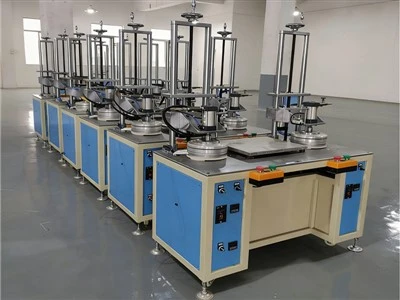
If you’re ready to explore how an Automatic Plastic Cylinder Machine can work for your thin-walled cylinder production, we’re here to help. Our team has years of experience working with manufacturers across different industries, and we’ll work with you to design a solution that fits your specific needs.
PVC Cylinder Edge Curling Side Machine References
Thin-Wall Injection Molding: Processes, Materials, and Applications. Society of Plastics Engineers, 2021.
Injection Molding Tolerances and Precision Manufacturing. Industrial Press, 2019.
Material Properties for Thin-Walled Polymer Components. Journal of Polymer Engineering, vol. 38, no. 7, 2018, pp. 621-635.
Titagong (Dongguan) Machinery Co., Ltd.
We are one of the most reliable manufacturers and suppliers of automatic plastic cylinder machine in China. With abundant experience, we warmly welcome you to buy bulk high quality equipment in stock here and get pricelist from our factory. For price consultation, contact us.
Address: No.149, Qingyi Road, Qingxi Town, Dongguan City, Guangdong Province, China
E-mail: shuaizoe@gmali.com
WebSite: https://www.titagonggroup.com/
