When someone hits me up asking, “How long does a Pay As You Go (PAYG) battery system take to deliver?” I never just pull a number out of thin air. Over the last 8 years selling these things to small business owners in remote parts of East Africa and rural communities across Southeast Asia, I’ve learned it depends on way more than just slapping a label on a box and shipping it. Let’s break this down like I’d explain it to a regular guy sitting across from me at a local café—no corporate jargon, no fancy terms that make your eyes glaze over. Pay As You Go Battery System
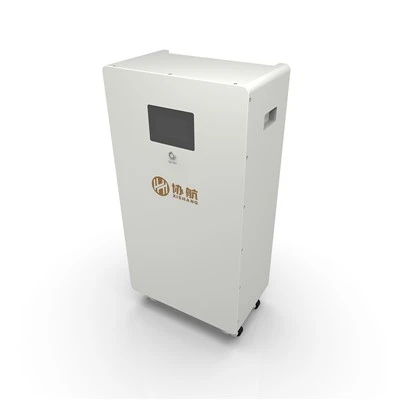
First off, let’s get one thing straight: a PAYG battery system isn’t a 5-pound phone charger you pick up at a corner store. It’s a whole setup—usually a lithium-ion battery, a charge controller, maybe a few LED lights, and sometimes a small inverter for powering a TV or a phone. The idea is that customers pay small, weekly (or even daily) amounts via SMS or mobile money until they own the thing outright, right? But that little bit of extra tech—mobile money integration, custom load settings for cooking or school work—adds steps that regular battery shipments don’t have. That’s why delivery times shift, depending on where the customer is, what exact setup they ordered, and even how busy our local warehouse team is that week.
Let’s start with the fastest case scenario—because I know that’s what most people actually care about. If a customer orders a basic system (say, a 10Ah battery with 2 LED lights, no inverter) and they’re in a country where we keep pre-stocked units on our local shelves—like Kenya or Tanzania, for example—we can get that order packed and shipped within 24 to 48 hours. Wait, but that’s just to the local transport hub, right? Rural road conditions change everything. If the customer is in a place with decent paved roads, a trusted local delivery partner can drop it off at their village in 2 to 5 days total. But if it’s a super remote area—like parts of western Uganda where the only roads are dirt tracks that turn to mud when it rains? That jumps to 7 to 14 days, easy. Sometimes we have to do small drop-offs by motorbike, which takes longer, especially during wet seasons.
Now, what if a customer wants a custom system? Like, they run a small barbershop and need enough power for clippers, a TV, and a fridge? That’s a 50Ah system, with a bigger inverter, and we have to pre-configure it with the right load settings so the mobile money system tracks payments correctly. That adds a couple days to the process. First, our engineering team has to pull the parts from the warehouse, assemble the charge controller to match their exact needs, test it to make sure no wires are loose (we can’t afford a unit dying in the middle of a payment cycle), and set up the mobile money portal so when they text in their payment code, the system updates. That adds 3 to 5 extra days, so total from order to delivery is now 7 to 10 days for pre-stocked custom units, or up to 21 days if we have to build the unit from scratch because we ran out of stock that week.
Wait, hold on—what about international customers? I get a lot of inquiries from small NGOs or rural development groups in places like Myanmar or parts of Nigeria that don’t have our local warehouses yet. That’s where delivery times get a little trickier. For international shipments, the first step is customs clearance, and that’s not something we can rush. Different countries have different rules about importing lithium-ion batteries—some require special documentation to make sure the batteries don’t pose a fire risk, others have import taxes that take time to sort out. If we’re shipping to a place with no prior clearance history for our systems, that can add 7 to 10 days right there. Then, once it clears customs, it’s onto the local transport, which again depends on how remote the final destination is. For international orders, total delivery time usually ranges from 14 to 30 days. The only time that goes longer is if there’s a delay at customs—like if a new government regulation pops up, or a shipment gets held up because of a missing paper. We’ve all been there, it’s frustrating, but it’s out of our hands.
And let’s not forget about post-delivery setup, right? A lot of customers think “delivery” just means dropping the box off at their door, but with PAYG systems, we usually do a quick on-site check to make sure it’s working. For closer areas, our local field techs can swing by within 2 days of delivery to help the customer set up the lights or the mobile money code. For more remote areas, sometimes we do a video call—just a quick 10 minute chat—to walk them through it. That’s not part of the physical delivery time, but it’s part of the whole process that makes our systems work, so it’s something to keep in mind if you’re in the market.
Another thing that throws delivery times off is seasonal demand. Like, during harvest season in parts of West Africa, or back-to-school season in East Africa, we get a huge spike in orders. Teachers are buying systems so kids can study after sunset, small market vendors are getting them for their stalls, and suddenly our warehouse is backed up. During those peak times, we add 3 to 5 days to all delivery times because we have to prioritize orders, but we always keep customers updated—we text them right away if their order is going to be a little late, no radio silence here. We hate leaving people in the dark, so to speak.
Wait, let’s talk about stock levels too. If a customer orders a super popular system—like our 20Ah unit that’s used for small shops—sometimes we sell out for a week or two. We keep safety stock for the most common setups, but if there’s a global shortage of lithium-ion cells (which has happened a couple times in the last few years), that can set orders back even more. In those cases, we update customers on when we expect new stock to arrive, and we might offer a slightly bigger battery for the same price to make up for the delay—win-win, right? No one likes waiting, but we try to make it as painless as possible.
I should also mention the difference between order processing and shipping. A lot of new customers mix these up. Order processing is all the stuff we do before it leaves our warehouse: checking the order to make sure it’s correct, testing the system to make sure no defects, loading it onto the truck or motorbike. Shipping is the actual transit time to your door. So if someone asks “when will my order be here?” I always give them a number that combines both, and I tell them the earliest and latest possible dates—no guessing. That’s how we build trust.
Let me share a quick real-life example to make this concrete. Last month, a small coffee farmer in Rwanda ordered a basic 15Ah system so he could run his coffee roaster after dark. He’s in a village about 80 km from Kigali, where our warehouse is. We got his order on a Monday, processed it and tested it that same day, shipped it out on Tuesday. It arrived at his village on Wednesday, and our local tech met him there on Thursday to help him set it up. Total time from order to fully working system: 5 days. But a week before that, a group from a NGO in Myanmar ordered 50 custom systems for remote schools. That order had to clear customs in Yangon, which took 12 days, then shipped out to the schools in Shan State, which took another 10 days. Total time: 27 days. That’s the difference between a local order and an international custom order.
Now, you might be thinking, “Why can’t you just send it faster?” Well, safety is a big one. We test every single system twice before it ships—lithium-ion batteries can be dangerous if they’re not set up right, so we don’t cut corners on testing. And for remote areas, we use local transport partners who know the roads, which is way more reliable than trying to ship a big truck on a dirt road that gets washed out during rains. If we rushed, we’d end up with broken systems that don’t work, which defeats the whole point of a PAYG system that’s supposed to help people.
Another thing we pride ourselves on is transparency. We never make promises we can’t keep. If someone asks for delivery time, we give them a range, not a hard date, and we update them at every step: “your order shipped today,” “it’s cleared customs,” “it’s out for delivery.” We also have a text line you can use to check your order status any time—no need to call and wait on hold. That’s important because a lot of our customers don’t have great internet, so SMS is the best way to reach them.
So, putting it all together, the delivery time for a PAYG battery system isn’t one number. It depends on: where you are, what kind of system you ordered, how busy we are, and whether we have stock. For local orders (within 100 km of our warehouse) with a basic pre-stocked setup: 5 to 10 days total. For local custom orders: 7 to 15 days. For international orders to a country with existing clearance: 14 to 30 days. For international orders to a new country: 25 to 40 days. And during peak seasons, add 3 to 5 days to all of those.
If you’re a small business owner, NGO, or rural community leader looking for a PAYG battery system, the last thing you want is to wait around and not know when your order will arrive. We get that. That’s why we keep the process as clear and quick as possible, without cutting corners on quality or safety.
If you’re ready to chat about what setup works for you, or just have more questions about delivery times, feel free to reach out. We’d love to help you get power to where you need it, as quickly as possible. No salesy pitches, no complicated forms—just real answers to real questions.
Portable Power Station References:
- World Bank. (2022). The Role of Pay As You Go Solar Systems in Rural Electrification. Washington, DC: World Bank Group.
- International Energy Agency. (2023). Global Market Review of Lithium-Ion Batteries for Off-Grid Energy Access. Paris: International Energy Agency.
- GOGLA. (2022). PAYG Solar Delivery Times and Customer Experience Survey. London: Off-Grid Energy Association.
- United Nations Development Programme. (2021). Remote Energy Delivery Logistics: Challenges and Solutions for Rural Communities. New York: UNDP.
Zhejiang Xiehang New Energy Equipment Co., Ltd.
As one of the most professional pay as you go battery system manufacturers and suppliers in China, our products have good reputation in the market. Please erst assured to wholesale custom made pay as you go battery system from our factory. If you have any enquiry about cooperation, please feel free to email us.
Address: No.5 Hechen Road, Zhouwangmiao Town, Haining, Jiaxing City, Zhejiang Province, China
E-mail: dan.wu@xiehang.net
WebSite: https://www.shineonpower.com/
