Let’s cut straight to the chase—if you’ve ever typed “can brushless motors generate electricity?” into a search bar while sourcing motors for a project, you’re not alone. I hear this question every week, because I’m the founder of a brushless motor supply company that ships units for everything from e-bikes and industrial machinery to custom robotics. At trade shows, during client calls, even when grabbing coffee with an aerospace engineer friend, this question comes up, and it’s one that’s often answered with half-truths or overly technical jargon that muddles the real answer. Today, I’m breaking this down like I do with my new engineering hires—no fluff, just real-world context, how this works, and what it means for anyone looking to buy or use brushless motors (or repurpose them for energy). Brushless Motor

First, let’s start with what a brushless motor actually is, because the name gives a clue, but most people don’t dig into the core function. Traditional brushed motors work by using physical brushes and a commutator to reverse the flow of electricity through the rotor, which creates the torque needed to spin the motor shaft. But brushless motors (we call them BLDC motors, short for Brushless Direct Current, though technically some are AC synchronous too) skip the brushes entirely. Instead, they have magnets mounted on the rotor, and copper windings on the stator—the stationary part of the motor body. A tiny, integrated electronic controller (we call it an ESC, or electronic speed controller) sends alternating current to those windings in a precise sequence, creating a moving magnetic field that pulls the rotor’s permanent magnets along. That’s what makes the shaft spin, whether you’re powering a warehouse forklift or a backyard drone.
So now, the million-dollar question: if you flip that process, can you make the same motor work backwards to produce electricity? Let’s test this with something most people have experienced. Ever ridden an e-bike and noticed that when you stop pedaling or head down a steep hill, the motor feels like it’s adding resistance? That’s not just a built-in feature—that’s the BLDC motor generating electricity, a phenomenon called “regenerative braking.” I’ve had dozens of e-bike distributors come to me confused, saying “my motor is powering the bike now, not just being powered by it,” and that’s exactly this effect.
Here’s the science behind why this works, and it’s all about Faraday’s Law of Electromagnetic Induction—something I learned in my college engineering classes, but it’s simpler than it sounds. Faraday’s Law says that if you move a conductor through a magnetic field, or vice versa, you’ll induce an electric current in that conductor. In the original motor design, we use the ESC to send current through the stator’s copper windings (conductors) to create a magnetic field that moves the rotor’s permanent magnets. If you reverse that input—spin the rotor with an external force, like pedaling an e-bike or a wind turbine’s blade, or even the wheels of an electric car going downhill—the permanent magnets on the rotor move past the stator’s windings. That movement creates a changing magnetic field, which induces AC current in the windings. That current gets converted to DC by the ESC’s built-in rectifier (most modern BLDC controllers have this, even if you don’t use regenerative braking), and that’s electricity you can harvest, store in a battery, or feed back into a grid.
Wait, hold on—this isn’t magic, and it doesn’t work exactly the same way as a standalone generator. Let’s clarify that, because I see a lot of people mixing up BLDC motors with dedicated alternators or generators. A standard BLDC motor (the ones we supply for general use, e-bikes, light robotics) isn’t optimized to be a generator, but it will absolutely produce electricity when you spin its shaft fast enough, at least for low to medium power applications. Let’s do a quick real-world example: take a 500W BLDC motor we sell for mid-tier e-bikes. Its rated RPM is around 3,000 when operating as a motor. If you spin that same shaft to 3,000 RPM with an external force (say, a person pedaling hard downhill, or a small wind turbine blade), the motor will output roughly 500W of electricity—give or take, depending on the motor’s efficiency.
But here’s the catch: the voltage and current it produces depend entirely on how fast you spin the rotor, and the motor’s design. If you spin the shaft too slowly, you’ll get a tiny amount of current, too fast and you’ll overwork the windings. For example, a BLDC motor rated for 24V will only output 24V if you spin it at the RPM that was designed for that voltage when it’s running as a motor. Slow it down, and you get less voltage; speed it up, and you get more—until the insulation on the windings breaks down. That’s why dedicated generators are optimized to output a consistent voltage at a specific RPM, which standard BLDCs aren’t.
I see this confusion all the time with hobbyists, too. A lot of my small business customers (the ones building custom wind turbines for off-grid cabins) will message me saying “can I use your 1kW BLDC motor instead of buying a $2,000 dedicated generator?” The short answer is: yes, for small, low-power applications, but you have to adjust your setup. A few years back, I worked with a guy in Vermont who built a 100W off-grid charging system using one of our 12V BLDC motors salvaged from an old e-scooter. He mounted the motor to a weather vane, so when the wind blew, the vane turned to face the wind and spun the motor’s shaft. He paired it with a simple charge controller he built from a circuit kit, and it was enough to power his phone, a small LED lamp, and charge a 12V marine battery for his security camera. It ran for three years without issues, until he upgraded to a higher-power system, and that motor’s output was steady enough for his needs.
On the industrial side, this is a huge deal for companies looking to save energy. Regenerative braking is now standard on most electric forklifts, automated guided vehicles (AGVs), and even some overhead cranes, and those systems almost exclusively use BLDC motors for exactly this reason. When a forklift lowers a heavy pallet, the motor isn’t just coasting—it’s acting as a generator, converting the pallet’s kinetic energy into electricity that gets fed back into the forklift’s battery, instead of wasting that energy as heat like old brushed motor systems. A large logistics client I work with in Atlanta recently told me that switching to our BLDC-based regenerative braking systems cut their forklift energy costs by 18% in the first year. That’s not a hypothetical—that’s real savings, all from a motor that’s designed first to drive, not generate.
Now, let’s talk about limitations, because I’m not going to sell you a line that BLDC motors are perfect for power generation. First, as I mentioned, their output isn’t as consistent as a dedicated generator. If you’re building a wind turbine or a hydroelectric system that needs to power a home 24/7, you’ll need a charge controller that can handle variable voltage and current, because the motor’s output will change with wind speed or water flow. Second, efficiency drops when you use a BLDC as a generator, compared to a purpose-built unit. A good BLDC motor is around 85-90% efficient when running as a motor; as a generator, that drops to 70-80%, because some of the energy from spinning the shaft is lost as heat in the windings. Third, most standard BLDC motors aren’t sealed for long-term use in harsh conditions (like constant water exposure or extreme dust), so if you’re mounting one outdoors, you’ll need to get an IP65-rated unit, which is the standard we offer for outdoor and industrial applications.
Another common question I get: can I use any BLDC motor to generate electricity, or are some better than others? Short answer: yes, some are way better. BLDC motors with more permanent magnets (higher magnet density) and thicker copper windings will generate more electricity at lower RPM, which is ideal for low-speed applications like small wind turbines. Motors from reputable suppliers (like ours) use high-grade neodymium magnets that hold their magnetism for decades, so they won’t lose output over time. Cheap, no-name BLDC motors from overseas might use lower-quality magnets that demagnetize if they get too hot, which makes them useless for generation. I’ve had a customer tell me he bought a cheap BLDC motor from a marketplace site for his turbine, and after a month of running, it only put out 30% of the power it did when he installed it—because the magnets failed. That’s why we never cut corners on motor components, even for our lowest-cost lines.
Let’s wrap this up with what this means for you, whether you’re a hobbyist, a small business owner, or an engineer sourcing motors for a project. If you need a motor that can drive a machine or a vehicle, and might occasionally generate energy (like for regenerative braking), a standard BLDC motor from a reputable supplier is perfect. If you need a dedicated generator for high-power off-grid systems, you’d still be better off with a purpose-built unit, but a BLDC can work as a secondary, low-power generator for small loads. If you’re just curious about the science, go grab an old BLDC motor from a broken remote-controlled car, spin its shaft with your fingers, and touch the two leads to an LED—if you spin it fast enough, the LED will light up. I’ve done that with my 10-year-old niece for a school science fair, and it’s one of the best demo projects I’ve seen.
At the end of the day, this question is all about seeing the versatility of BLDC motors—they’re not just one-trick ponies. They power millions of devices every day, but they can also help save energy, power small off-grid systems, and even turn wasted kinetic energy into usable electricity. If you’re working on a project that involves BLDC motors, whether you need a unit for driving, for generating, or both, we have a range of options tailored to different applications. We offer everything from small 12V BLDC motors for hobby projects to high-torque, IP67-rated industrial units for AGVs and renewable energy systems.
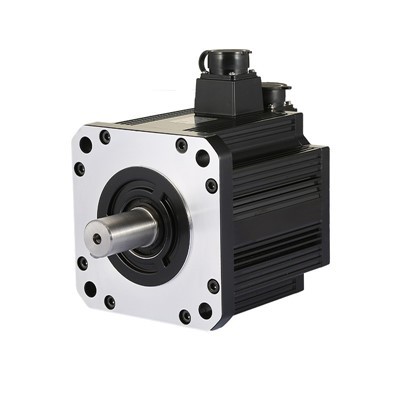
If you’re looking to source a brushless motor, or want to talk through whether a BLDC motor is right for your energy-generating project, our team of engineers is here to help. We don’t do one-size-fits-all solutions, so we’ll work with you to find the right motor, ESC, and accessories that fit your specific needs and budget. Reach out to us to discuss your requirements and get a tailored quote.
Switched Reluctance Motor References
- U.S. Department of Energy. (2021). Electric Motor Technology Fact Sheet: Brushless Direct Current Motors.
- Boldea, I., & Nasar, S. A. (2010). The Electrical Machines Handbook (2nd ed.). CRC Press.
- International Electrotechnical Commission (IEC 60034). (2018). Rotating Electrical Machines – Part 1: Rating and Performance.
Zibo Auric Mechanical and Electrical Technology Co., Ltd.
As one of the leading brushless motor manufacturers and suppliers in China, we warmly welcome you to buy advanced brushless motor for sale here from our factory. All customized motors are with high quality and competitive price.
Address: B419, High-tech Entrepreneurship Park, High-tech Zone, Zibo City
E-mail: cui@auricmotor.com
WebSite: https://www.auricmotor.com/
