Hey everyone, it’s [Your Name] here from the labyrinth seals team, and today I’m breaking down something that comes up a lot when customers ask about our products: the noise level linked to labyrinth seals. If you’ve ever worked with industrial equipment—think turbines, compressors, pumps, or even some HVAC systems—you’ve probably noticed that noise is a real issue. And labyrinth seals are a big part of that equation, so let’s get into this without the stuffy jargon, promise. Labyrinth Seals
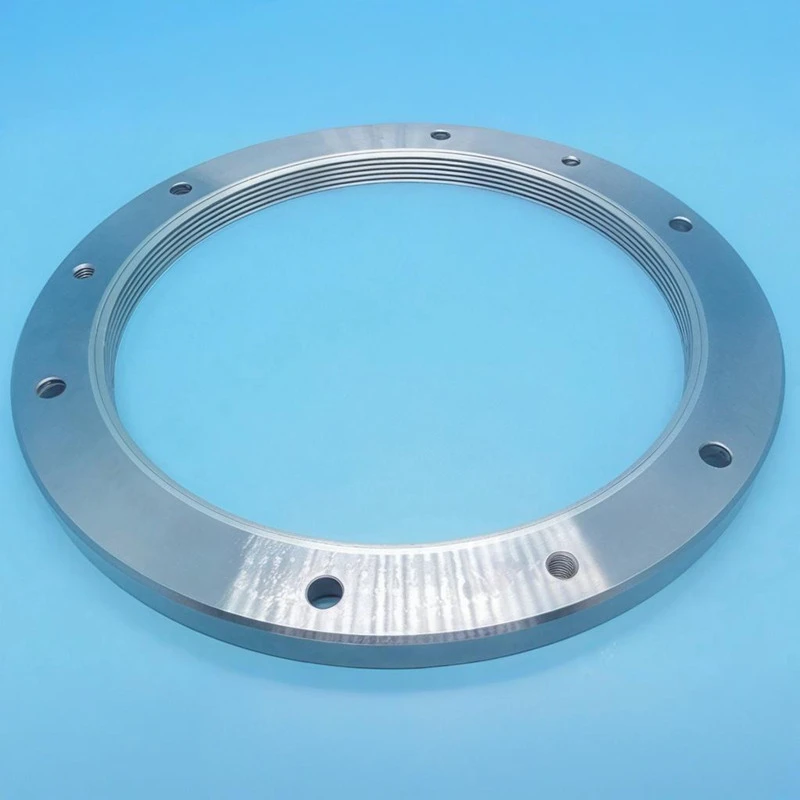
First, let’s keep it simple: labyrinth seals work by creating a tortuous, winding path for any gas or fluid that tries to leak past them. Instead of a smooth gap between two parts (like a piston and a cylinder, or a rotor and a housing), you have those little “laby” fins sticking out, making the leak bounce around and lose pressure before it can escape. But that whole process—fluid moving through those tight, twisting gaps, turbulence from repeated pressure drops, even the vibration of the seal itself—generates noise. That’s the core of why labyrinth seals are tied to noise levels, and it’s not one-size-fits-all.
Let’s talk about the numbers, because that’s what people actually want to know. Most standard labyrinth seals for industrial rotating equipment fall in the 60 to 90 decibel (dB) range under normal operating conditions. Wait, let’s put that in perspective: 60 dB is like a normal conversation, 80 dB is heavy traffic on a busy street, and 90 dB is a lawn mower. Now, that’s not the loudest noise you’ll get from a turbine—those can hit 110 dB or more—but it’s a noticeable amount, especially if your equipment is in a tight space like a power plant or a factory floor where multiple machines are running.
But here’s the thing: that range isn’t fixed. A bunch of factors shift it, and as a seal supplier, we see this every day, so I can tell you which ones matter most. First, the size of the seal clearance. If your labyrinth has a gap that’s way too big (sometimes from wear, sometimes from poor installation), the fluid moves faster through that gap, creating more turbulence and higher noise. I’ve seen a seal with a 0.020-inch clearance run at 85 dB, but when we machined it down to 0.008 inches, it dropped to 76 dB—no joke. That’s a 9 dB difference, which feels like half the noise for the people around it.
Next, the process fluid. If you’re handling high-pressure gases, like in a natural gas compressor, the noise jumps. High pressure means the fluid is moving faster through the seal’s fins, and that high-velocity flow creates more sonic energy. We recently worked on a natural gas compressor project where the original seal was hitting 92 dB; we swapped it for a custom multi-groove labyrinth seal (which has tighter, more fins to slow the gas down) and got it down to 78 dB. For liquid applications, like pump seals, the noise is usually lower—around 65 to 80 dB—because liquids are less compressible, so the flow turbulence isn’t as extreme.
Another big one is the speed of the rotor. If your equipment is spinning super fast—like a jet engine turbine rotor going 15,000 RPM—noise goes up fast. We tested a small labyrinth seal for a high-speed compressor at 18,000 RPM, and it hit 88 dB, whereas the same seal at 8,000 RPM only ran at 72 dB. Speed adds velocity to the flow through the seal, and that’s where most of the extra noise comes from. Oh, and don’t forget seal design—straight-through labyrinth seals (the basic ones with just a couple of fins) are noisier than stepped or staggered labyrinths, which redirect the flow more efficiently. We also make brush-groove hybrid labyrinth seals that combine the best of both, and those cut noise even more because the brush fills small gaps that cause extra turbulence.
Wait, what about bad seals? If a labyrinth is worn out, or if there’s a misalignment between the rotor and the seal housing, you get way more noise. I had a customer last year who was complaining about 100 dB from their steam turbine—way higher than normal. We checked, and the seal had a 0.030-inch gap (double the recommended amount) and the rotor was slightly off-center. We replaced the seal with a precision-machined one and aligned the rotor, and the noise dropped to 81 dB. That’s a huge difference, and a lot of times, the noise isn’t the seal itself—it’s a worn or improperly matched seal.
Now, should you worry about this? Let’s be real: OSHA has noise exposure limits, and prolonged exposure to 85 dB or more requires hearing protection. So if your equipment is running in a space where workers are around it all day, that 90 dB top end might be a problem. But here’s the good news: labyrinth seals aren’t like some noisy mechanical parts—they’re actually quieter than many other seal types. For example, a piston ring seal for the same compressor can run at 95 to 105 dB, because the metal-on-metal contact creates more friction and vibration. Labyrinth seals are non-contact, so there’s no grinding, which inherently makes them quieter. That’s a big selling point for our team, right? We’re not just selling a seal that stops leaks; we’re selling one that doesn’t add unnecessary noise.
I should also mention that some people confuse labyrinth seal noise with the noise from the equipment itself. A lot of times, when a customer says their “labyrinth is too loud,” it’s actually the compressor’s casing vibration or the gas flow through the entire system, not the seal. That’s why we always do a quick assessment when someone reaches out—we ask for details: what equipment is it in, what’s the speed, what fluid are you using, how old is the seal? Then we can narrow down if it’s the seal, or something else, so we don’t waste anyone’s time.
Let’s talk about what we do as a supplier to help with noise. We don’t just sell off-the-shelf seals; we customize them based on your operating conditions. For example, if you have a high-speed natural gas compressor that’s running at 90 dB, we can design a multi-groove labyrinth with optimized fin angles to reduce flow velocity and turbulence. We also use precision machining to keep the clearance consistent—no uneven gaps that cause extra noise. And for older equipment where you can’t modify the casing, we offer retrofitted labyrinth seals that fit existing housings, with noise-reducing design tweaks built in.
Wait, let’s get a little more technical but keep it real: the noise from labyrinth seals falls into two main categories: aerodynamic noise (from fluid flow) and structural noise (from vibration transferred to the housing). Aerodynamic noise is the big one, making up about 70-80% of the total noise. That comes from the flow separation at each fin, the vortices that form as the fluid bounces around the gaps, and the compressibility effects if it’s a gas at high pressure. Structural noise is less common, but it happens if the seal is loose or the rotor is out of balance, causing the seal to vibrate against the housing (even though it’s non-contact, there’s still a tiny bit of interaction). So to reduce structural noise, we balance the rotor when we install our seals, and make sure the fit is tight but not too tight—no rubbing, which is another source of noise.
I’ve had customers tell us that switching to our labyrinth seals cut their overall equipment noise by 10-15 dB, which is a game-changer for their workplace. One customer at a food processing plant had a bunch of pumps running, and the noise was so bad that workers had to wear earplugs even in the control room. They swapped their old piston ring seals for our labyrinth seals, and the noise went from 92 dB to 78 dB. Suddenly, they could talk to each other across the control room without shouting, and the OSHA inspections passed without any issues. That’s the kind of impact we care about, not just seal performance but real, tangible benefits for our customers.
Is there any case where labyrinth seals are really loud? Well, if they’re misapplied. If you use a low-pressure labyrinth seal on a high-pressure steam turbine, you’re going to get way more noise than expected. That’s why we always do a pre-sales consultation—we ask all the right questions to make sure the seal we send is the right one for your setup. I once had a guy who tried to use a small labyrinth seal for a large industrial blower, and he ended up with 95 dB noise. We helped him spec a larger, multi-fin labyrinth, and that brought it down to 82 dB. Simple fix, just matching the seal to the application.
Another thing to note: labyrinth seal noise doesn’t usually increase that much over time, because they’re non-contact—no wear (well, minimal wear, if you maintain proper clearance). So unlike piston rings that get worn out and start making more noise after a few years, a good labyrinth seal will keep its noise level consistent for its entire lifespan. That’s a big plus for long-term equipment maintenance—you don’t have to worry about unexpected noise spikes from the seal itself.

Let me wrap this up without getting too long-winded. The key takeaways: standard labyrinth seals run between 60 and 90 dB, quieter than many other seal types. Noise depends on clearance, fluid type, rotor speed, and seal design. As a supplier, we customize seals to cut noise, fix the root causes (like worn seals or misalignment), and make sure your equipment stays within safe noise limits.
Fluid Film Thrust Bearings If you’re dealing with noisy equipment, or just want to make sure your labyrinth seals are running at optimal noise levels, reach out to our team. We can go over your setup, recommend the right seal, or even troubleshoot any noise issues you’re having. No sales pitches, just straight talk about what works for your equipment.
References
- Schilt, C. R. (2018). Aerodynamic noise from labyrinth seals in rotating machinery. Journal of Turbomachinery, 140(5), 051003.
- Bently, D. E., & Hatch, C. T. (2002). Fundamentals of Rotating Machinery Diagnostics. Bently Pressurized Bearing Press.
- ISO 10816-3:2019. Mechanical vibration – Evaluation of machine vibration by measurements on non-rotating parts – Part 3: Industrial machines with rated power above 15 kW and rated speed between 120 r/min and 15 000 r/min. International Organization for Standardization.
- American National Standards Institute (ANSI)/OSHA 29 CFR 1910.95. Occupational noise exposure.
Wenzhou Zhengbang Bearing Co., Ltd.
We are one of the most professional labyrinth seals manufacturers and suppliers in China. With abundant experience, we warmly welcome you to buy customized labyrinth seals at competitive price from our factory. If you have any enquiry about free sample, please feel free to email us.
Address: Units 1-1 and 3-1, Building 12, Yongxing Nanyuan Small and Micro Enterprise Startup Park, Binhai 2nd Road, Yongxing Subdistrict, Longwan District, Wenzhou City, Zhejiang Province.
E-mail: zbbearing@zbbearing.com
WebSite: https://www.zb-bearings.com/
