As a steel grating supplier who’s been in this game for over a decade, I’ve lost count of how many times a new fabricator, maintenance manager, or even a DIY project lead has reached out asking the same question: “What’s the size of a standard steel grating panel?” It’s such a simple question on the surface, but here’s the thing—there’s no one-size-fits-all answer. At least, not the rigid, unchanging number most people expect. I’ve fielded that query in a warehouse where we had 12 different panel sizes lined up for a refinery job, and on a construction site where a sub foreman swore “standard” meant 3×6 feet because that’s what he used 15 years prior. Today, I’m breaking down what “standard” actually looks like in the steel grating world, why it shifts depending on use case, and how we as suppliers land on the sizes that work best for real projects. Steel Grating
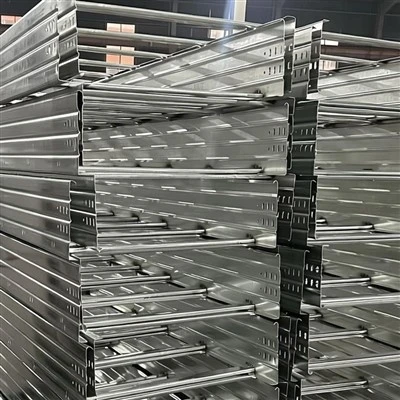
First, let’s ground this in the basics to make sure we’re all on the same page. Steel grating panels are those grid-like metal structures you see covering walkways on industrial rooftops, drain grates on highway medians, platform flooring at shipping ports, and even catwalks at power plants. They’re made by welding two sets of metal bars (load bars that run the length of the panel, and cross bars that run perpendicular to tie them together) into a uniform, rigid grid. The two core dimensions everyone cares about are length and width—those are the numbers that determine how a panel fits into a frame, how easy it is to handle, and how much it’ll cost. Thickness is another factor, but that’s tied to load capacity, not the panel size someone would order “off the shelf.”
Now, when someone says “standard size,” they’re usually referencing the most commonly manufactured panel that doesn’t require custom cutting. For the US market—our primary base at the company where I work—those standard off-the-shelf panels lean heavily on imperial measurements, and the two sizes I can rattle off in my sleep are 3 feet by 6 feet (36 inches x 72 inches) and 4 feet by 8 feet (48 inches x 96 inches). Let’s hit the numbers: 3×6 is the smaller of the two, perfect for smaller drain grates, low-traffic walkways, or panels that need to fit through narrow warehouse aisles or doorways. The 4×8 is the workhorse—what most refineries, processing plants, and general contractors ask for first when they don’t specify a custom size. We manufacture thousands of these every month, and they’re designed to balance two non-negotiables for end users: how much coverage you get in one panel, and how heavy the panel is to lift. A 4×8 steel grating panel, even for the common carbon steel variety (which is lighter than stainless, but still sturdy), weighs roughly 50 to 70 pounds depending on the bar spacing. That’s a big enough panel to cut down on installation time (you use fewer panels to cover a large area) but light enough that two average crew members can carry it without a forklift. No one wants to order a panel that’s 10 feet long only to find it can’t fit through a job site entrance, or so heavy it requires a crane to move at every step.
But here’s the part most first-time buyers don’t expect: those are just the US-specific standard sizes. Globally, the standard shifts to metric almost across the board. In Europe, Asia, and most of the rest of the world, the go-to standard panel is 1 meter by 2 meters (roughly 3.28 feet x 6.56 feet), with another common size being 1.25 meters by 2.5 meters (about 4.1 feet x 8.2 feet). I learned this early in my career when a German construction company placed an order for 500 grating panels and explicitly asked for metric standards—we almost messed it up by pulling our imperial 4×8 stock, which would’ve cost them thousands in rework. The ISO and EN standards (the European regulatory bodies for metal products) set these sizes for consistency across the supply chain, so a fabricator in Poland knows exactly what a 1x2m panel means when they receive a shipment from a factory in Spain. That’s why, when we get inquiries from international clients, we always lead with both imperial and metric standard sizes to avoid confusion.
Of course, “standard” isn’t just regional—it’s also tied to the type of steel grating you’re buying. Not all grating is the same, and that changes what counts as a standard panel. Let’s break down the most common types and their standard sizes:
Carbon steel grating is the most ubiquitous, used for everything from parking garage drain grates to industrial catwalks. For this, our standard off-the-shelf sizes are indeed 3×6 and 4×8 feet, with bar spacing that usually falls into 1-3/8 inch (for light traffic) or 2 inch (for heavy industrial use). Then there’s stainless steel grating, used for food processing plants, pharmaceutical facilities, and marine applications where corrosion is a major concern. Stainless is more expensive, so manufacturers typically stick to slightly smaller standard panels for stock—usually 2×4 feet or 3×6 feet. Why? A 4×8 stainless panel would be way heavier and more costly to stock than a smaller one, so we keep smaller stainless standard sizes to keep inventory manageable for our clients who don’t need custom cuts.
Another type is aluminum grating, popular for projects where weight is a top priority—like rooftop walkways for office buildings, where adding extra weight to the structure is a concern. Aluminum is lightweight, so its standard panels are a bit larger than carbon steel sometimes—our most common aluminum standard is 4×10 feet, though 3×6 is still offered for smaller jobs. That extra length works great for rooftop runs, where you don’t want to split a 10-foot span into multiple 8-foot panels and create tripping hazards.
Now, let’s talk about why these sizes became “standard” in the first place. It’s not some arbitrary number picked by a committee (well, not entirely). The 4×8 foot standard, for example, traces back to the construction and lumber industries, where 4×8 sheets of plywood, drywall, and other building materials have been the industry standard for decades. Grating manufacturers realized early on that if they matched that size, it would make installation way easier—contractors are already trained to cut and frame for 4×8 panels, so switching to a different size would require reconfiguring their entire process. Add to that the fact that most industrial walkways, platform frames, and drain pits are built to fit common panel sizes—cutting a custom panel costs time and money, so using a standard size saves everyone on the job site a headache.
But here’s what I want to make clear: “standard” doesn’t mean “only size available.” A lot of people come to us thinking that if their frame is 5 feet long, they have to order a custom panel. No way. We regularly cut standard 3×6 or 4×8 panels to fit any frame up to 10 feet long, as long as the cut is straight and doesn’t affect the structural integrity. We do this all the time for clients who have a slightly odd-sized walkway or a drain pit that’s 5.5 feet wide—instead of making them wait two weeks for a custom-made panel, we cut a standard 6-foot panel down to their exact size in 24 hours, no extra cost for the cut (as long as it’s a straight, single cut). That’s the value of working with a supplier who actually understands what “standard” means—we don’t lock our clients into one size; we use standard sizes to save them money, not limit them.
I also get a lot of questions about load capacity and how that ties to size. Let’s clear that up, because it’s a common mix-up. Load capacity is about the thickness of the load bars and the spacing between them, not the length and width of the panel. A standard 4×8 panel with 1/4 inch thick load bars has a load rating of around 100 pounds per square foot for light foot traffic, but if we use 3/8 inch thick load bars on that same 4×8 standard frame, it can hold up to 500 pounds per square foot for heavy industrial equipment. The size of the panel itself doesn’t change how much weight it can hold—just the bar thickness and spacing do. That’s a key point I wish more new project managers knew; they’ll order a 4×8 panel and ask why it can’t hold a 2,000-pound forklift, when the issue was choosing the wrong bar size, not the panel size.
Now, let’s get real about the exceptions, because not every job fits a standard size. For example, offshore oil rigs use grating that has to fit on narrow, curved platforms, so we’ll make custom panels that are irregular shapes, but even then, we usually start with a standard bar size and spacing to keep costs down. Or stadiums, where drain grates need to fit between seating risers—those are often cut from standard 3×6 panels to fit the narrow gaps, so we don’t have to make a custom die for each seat gap. Even in those cases, standard sizes are the starting point.
As someone who’s been in this industry, I’ve seen projects go wrong because someone tried to cut corners on size. I remember a small construction job for a municipal park a few years back where the foreman insisted on using custom-made panels for a 30-foot walkway to cut down on the number of seams. By the time the custom panels arrived, the project was two weeks behind schedule, and the cost was 30% higher than if he’d just ordered five standard 6-foot panels (cut from 4×8 stock) with four seams. The seams were never an issue—contractors know how to trim them to be flush. That’s why I always tell new clients: start with standard sizes. They’re cheaper, in stock, and available same-day. Custom sizes should only be a last resort if your frame is truly odd-shaped or larger than 10 feet long.
If you’re reading this and you’re working on a project, whether it’s a small residential drain grate or a 50,000-square-foot industrial platform, the first step isn’t to ask for a custom size—it’s to reach out to us, tell us about your job, and we’ll walk you through the standard sizes that will work best. We’ll factor in your load requirements, the size of your doorways or job site entrances, and how easy you want the panels to be to install. We don’t just sell steel grating; we help you pick the right size to get the job done on time and on budget.
Before I wrap this up, let’s recap the key points so you don’t forget: First, “standard size” varies by region—imperial 3×6 and 4×8 feet for the US, metric 1x2m and 1.25×2.5m for Europe, Asia, and most of the world. Second, standard sizes change slightly by grating type: carbon steel uses the largest standard panels, stainless and aluminum use smaller, more manageable stock sizes. Third, standard sizes are designed for a reason—they work with common building materials, cut installation time, and keep costs low. And fourth, just because a panel is standard doesn’t mean you’re stuck with it; most standard panels can be cut to fit any frame up to 10 feet long for no extra hassle.
If you’re ready to start your steel grating project, or you just have more questions about sizes, load ratings, or custom cuts, don’t hesitate to reach out. We’re here to help you get the right panel for the job, whether it’s a single drain grate or a full industrial platform.
Fiber Optic Raceway References
- Steel Manufacturers Association. (2022). Standard Specifications for Steel Grating Panels. Washington, DC: Steel Manufacturers Association.
- European Committee for Standardization. (2021). EN 124:2021 – Gratings for Pedestrian and Vehicular Areas. Brussels, Belgium: CEN.
- American Institute of Steel Construction. (2020). Steel Grating Design Manual for Industrial Applications. Chicago, IL: AISC.
- Aluminum Association. (2021). Aluminum Grating Standards and Size Specifications. Arlington, VA: The Aluminum Association.
Hebei Shenyi Metal Products Co., Ltd.
Hebei Shenyi Metal Products Co., Ltd. is one of the most professional steel grating manufacturers and suppliers in China, featured by quality products and good service. Please rest assured to wholesale durable steel grating in stock here and get free sample from our factory. Customized orders are welcome.
Address: Gengtun Industrial Zone, Gengtun Village, Xiliangwa Township, Anping County, Hengshui City, Hebei Province
E-mail: HBshenyi@outlook.com
WebSite: https://www.shenyimetal.com/
