If you’ve ever spent time troubleshooting a machine that’s suddenly stopped mid-job, chances are you’ve thought about bearings—those small, unassuming parts that keep everything turning. When people first start looking into bearings, one question pops up all the time: what’s the real difference between flanged bearings and plain bearings? I run a flanged bearings supply business, so I get asked this nonstop from mechanics, machine operators, and even small business owners who just need to grab a part that works. Let’s break this down like we’re chatting over coffee, no boring textbook jargon, just what actually matters when you’re picking a bearing. Flanged Bearings

First, let’s start with the basics, super simple. Plain bearings are the OG of rotating or sliding parts. They’re basically a hollow tube—no extra edges, no grooves, just a smooth inner surface that fits snugly over a shaft, and an outer surface that sits in a hole in whatever part you’re connecting. When the shaft spins, the plain bearing eliminates metal-on-metal contact, so it reduces friction and wear. They’re cheap, super simple to install, and they get the job done for a lot of basic stuff. Like, the little bearings in a desk chair’s swivel base? That’s a plain bearing. The ones in a cheap skateboard wheel? Also a plain bearing. No frills, no extra parts, just a tube that lets two things slide past each other.
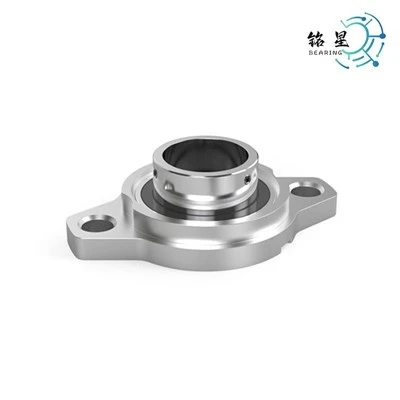
Now, flanged bearings. I sell these, so I’m biased, but let’s be honest about what makes them different. A flanged bearing is still a hollow tube, but it has a flat, circular flange sticking out around one end of the tube. Think of a water bottle with its lid edge, but instead of a lid, that edge is part of the bearing. That flange is the big game-changer here. It’s not just an extra piece for looks—it adds a whole new function that plain bearings can’t do on their own. A plain bearing relies on whatever it’s sitting in to keep it from sliding out of place. If you mount a plain bearing in a hole, it can slide right back out the other end if there’s any axial load—like if the shaft pushes back and forth along its length. The flange on a flanged bearing acts like a stop. It presses against the surface the bearing is mounted to, so it stays in place, no extra clips, no set screws, no extra parts needed. That’s the core difference, right? But let’s dig deeper because it’s not just a “has a flange, doesn’t have a flange” thing.
Let’s talk about installation, because that’s where a lot of people mess up. Plain bearings are straightforward. You drill a hole, press the bearing into it, make sure it’s straight, and you’re done. It’s easy, but you have to make sure the hole is deep enough. If the hole is too shallow, the plain bearing might slide out. If it’s too deep, you’ll mess up the fit. Flanged bearings? The flange takes care of alignment when you’re mounting them. You press the bearing into the hole until the flange hits the surface—you can see exactly when it’s seated, no guessing how deep the hole needs to be. That saves so much time on installation, especially for people who are in a hurry, like a mechanic on a jobsite who can’t wait around to get the fit right. But wait, there’s a downside here with flanged bearings: because of that flange, you need a little extra space around the edge of the hole. If you’re working with a machine that has tiny, tight clearances, that flange might get in the way. Plain bearings are slimmer, so they fit into smaller, cramp spaces without extra room.
Next up: load handling, which is the whole point of bearings, right? Friction and weight. Plain bearings handle radial load— that’s the load that pushes out from the center of the shaft, like when you’re riding a bike and your weight pushes down on the crankshaft. They’re good for that, especially if you use the right material—bronze, plastic, whatever. But axial load? That’s load that pushes along the shaft, like when a conveyor belt pulls against the end of the roller. Plain bearings are bad at axial load. If you put too much axial force on a plain bearing, it’ll slide out, or the sides will wear down fast because the metal is rubbing. Flanged bearings? That flange is built to handle that axial load. The flat face of the flange absorbs the force pushing along the shaft, so it distributes that load evenly, not just on the sides of the bearing tube. So if you’re dealing with a machine that has both spinning motion and back-and-forth push, flanged bearings are way more durable for that. Of course, no part is perfect. Plain bearings can handle higher loads in some cases if they’re made from heavy materials, but when it comes to combining radial and axial load, flanged bearings win every time.
Material options matter too, and that’s another place where people mix these two up. Plain bearings come in all sorts of materials: bronze, steel, plastic, even wood for super basic stuff. The material is easy to swap, and since they’re just a tube, you can machine them yourself if you have a lathe. Flanged bearings? They come in the same materials, but the flange adds a little complexity. The flange has to be the same material as the tube for most applications, otherwise it can crack or wear unevenly. I sell a lot of flanged bearings made from cast bronze for industrial use, because bronze is strong, corrosion-resistant, and works well with lubrication. Plain bearings in plastic are super common for low-load stuff, like toy wheels, but plastic flanged bearings are less common because the flange can snap easier. That’s a practical difference, not just technical.
Wait, what about lubrication? That’s a big one for bearing lifespan. Both types need lubrication to reduce wear, right? But how you add it can change. Plain bearings often have oil grooves cut into the inner surface to hold lubricant, so it stays in between the shaft and the bearing. Flanged bearings? You can add grooves to the flange too, because it’s a flat surface. That’s perfect for distributing grease around the edges, which is good for axial load applications where the flange is rubbing against a surface. Some flanged bearings even come pre-lubricated with solid lubricants, like graphite, which is great for machines that are hard to get to and don’t get regular maintenance. Plain bearings can come pre-lubricated too, but they don’t have the extra surface to hold that lubricant as well for side forces.
Let’s use real-life examples to make this make sense, because theory is fine, but what do you actually use each for? If you’re building a simple garden gate hinge, plain bearings are the way to go. They’re cheap, easy to install, and the only load is radial from the gate swinging. No need for axial load, so the plain bearing works perfectly. But if you’re building a conveyor roller for a factory, that’s where flanged bearings shine. The roller spins, so you have radial load, and the conveyor belt pulls back and forth a little, so you have axial load. The flange keeps the bearing from sliding off the roller shaft, and it handles that side force without extra parts like retaining rings (which you’d need with a plain bearing to stop it from sliding). Another example: a car’s wheel hub. Wait, actually, car wheel hubs use a type of bearing that’s a bit different, but if you’re talking about the small bearings in a power tool, like a drill. The drill chuck spins, and when you’re drilling, there’s push along the bit—axial load. So a flanged bearing there keeps the chuck from sliding back into the drill body, which would mess up the alignment.
Now, let’s talk about cost, because that’s a huge factor for most people. Plain bearings are almost always cheaper than flanged bearings. No extra piece (the flange) means less material, less machining time, so lower price tag. If you’re working on a tight budget and don’t need axial load handling, plain bearings are the obvious pick. But flanged bearings aren’t that much more expensive, and they save you money in the long run because they last longer in applications with axial load. You don’t have to replace them as often, and you don’t have to buy extra parts to keep them in place (like clips, collars, or extra mounting hardware). So it’s not just upfront cost, it’s total cost over time.
Wait, a common mistake I see people make is trying to use a plain bearing where a flanged bearing should go. They end up with the bearing sliding out, breaking a part, and having to stop production for hours. Or they use a flanged bearing where a plain bearing works just fine, wasting money on a part they don’t need. That’s why knowing the difference is so important. Let me clarify that again: if your only load is radial (spinning motion, no back-and-forth push) and you have space for the plain bearing to sit in the hole, plain is fine. If you have any axial load, or you don’t want to worry about the bearing sliding out while you mount it, flanged is the way to go.
Another thing: tolerance. Both bearings have tolerances (how much the size can vary) but flanged bearings have one more tolerance to worry about—the thickness of the flange. If the flange is too thick, it won’t sit flush against the surface you’re mounting it to. If it’s too thin, it won’t stop the bearing from sliding out. Plain bearings only have to worry about inner and outer diameter tolerances, so they’re a little more forgiving for beginners.
Now, let’s get to what I do as a flanged bearings supplier. I talk to a lot of people who come to me because they used the wrong bearing before and it broke. A lot of small businesses don’t have an engineer on staff, so they just pick the cheapest bearing off the shelf. But the right bearing makes all the difference. Flanged bearings aren’t just a “luxury” part—they solve real problems: less installation time, better axial load handling, no extra hardware needed. For industrial applications, that adds up to less downtime, which is huge for any business. If you’re running a factory, a 10-minute delay because a bearing slid out adds up to hundreds of dollars in lost production. A flanged bearing prevents that.
Wait, should I mention any downsides of flanged bearings? Absolutely, to keep it real. Like I said earlier, they take up a little more space. The flange adds a small diameter to the bearing, so if you’re working with a machine that has super tight clearances, like a small 3D printer that has parts that barely fit, a plain bearing might be the only option. Also, because of the flange, you can’t press a flanged bearing all the way through a hole—you have to mount it from one side. Plain bearings can go through a hole, which is easier for some assembly lines. But those are niche cases, not the majority of applications.
Another point: maintenance. Both types need regular lubrication, but flanged bearings are easier to grease sometimes, because the flange gives you a flat surface to apply grease to. You can use a grease gun on the flange without worrying about it getting on the shaft or other parts, which is a plus for machines that work in dirty environments, like construction equipment. Plain bearings need the grease to go into the gap between the shaft and the tube, which can be harder to reach if the machine is covered in mud or dust.
Let me wrap this up with a quick recap so it’s easy to remember. Plain bearings: simple tube, no flange, cheap, good for radial load, easy to install if you get the hole depth right, works for basic stuff. Flanged bearings: tube with a flat flange stop, handles radial and axial load, easy to mount (just press until the flange hits), no extra hardware, saves time and money long-term, great for industrial applications, takes a little more space but worth it for most use cases.
If you’re still not sure which one you need, don’t guess. I know a lot of people try to wing it, but that’s when problems happen. Whether you’re a mechanic fixing a piece of farm equipment, a small business owner building a custom display, or an engineer designing a conveyor system, getting the right bearing saves you stress and money. I supply high-quality flanged bearings for all sorts of applications, and I’m here to help you pick the right one, not just sell you whatever is the most expensive. If you have questions, or you’re ready to place an order, just reach out. No runaround, no confusing sales pitches, just straight answers about bearings that work for your needs.
Deep Groove Ball Bearings References
- Shigley, J. E., & Mischke, C. R. (2004). Standard Handbook of Machine Design. McGraw-Hill Education.
- Bearing Manufacturers Association. (2019). Plain and Flanged Bearing Design Standards. BMA Technical Report Series.
- Kolb, F. (2017). Tribology of Sliding Bearings: Materials, Coatings, and Applications. Taylor & Francis.
- Industrial Machinery Digest. (2022). “Choosing the Right Bearing: Flanged vs. Plain for Conveyor Systems.” Industrial Machinery Quarterly.
- Society of Manufacturing Engineers. (2021). Installation Best Practices for Plain and Flanged Bearings. SME Manufacturing Brief.
Taizhou Mingxing Bearing Co., Ltd.
As one of the most experienced flanged bearings manufacturers and suppliers in China, we warmly welcome you to wholesale durable flanged bearings in stock here from our factory. All customized bearings are with high quality and competitive price. For quotation, contact us now.
Address: No.168 Tonghe East Road, Luotuo Subdistrict, Zhenhai District, Ningbo City, Zhejiang Province
E-mail: qpj16888@outlook.com
WebSite: https://www.mingxingbearing.com/
