If you’ve ever driven through a residential neighborhood at dusk and seen the small, fenced enclosures holding equipment that feeds power to a dozen streetlights, apartment buildings, or local shops, you’ve likely spotted a compact substation. As someone who’s spent 12 years in the business of designing, building, and delivering these units—first as an engineer, now as a supplier focused on small to mid-scale projects—I’ve lost count of how many times clients have asked me: what makes a compact substation different from a traditional, sprawling substation? The short answer is power quality, and it’s the feature that makes compact substations not just a space-saving alternative, but a critical upgrade for everything from new housing developments to remote industrial sites. Compact Substation
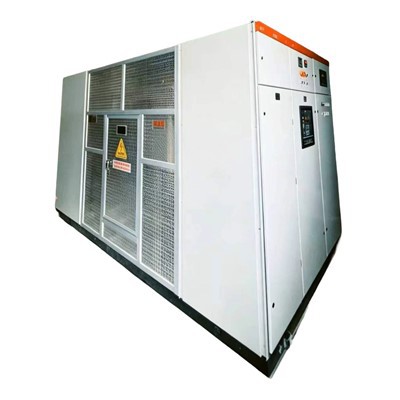
Let’s start by grounding this in what power quality actually means, because it’s not just a technical buzzword. Power quality refers to how consistent, reliable, and undistorted the electrical power being delivered is. For a home, that means your fridge doesn’t cycle erratically, your smart TV doesn’t glitch during a show, and your air conditioner doesn’t burn out its compressor prematurely. For a small business or a construction site, that means tools operate as intended, automated systems don’t crash, and downtime—even for a few minutes—doesn’t eat into profits. For hospitals, data centers, or water treatment plants, good power quality isn’t a convenience; it’s a safety issue. Traditional substations, which are usually spread across acres of land, rely on long feeders to connect to the end user. Those long lines add resistance, create voltage drops, and are prone to interference from weather, wildlife, and even other electrical equipment along the line. That’s where compact substations shine, and their power quality features stem directly from how they’re designed and deployed.
First, let’s talk about voltage regulation—one of the most non-negotiable power quality metrics. Traditional substations have to step down high-voltage power from the grid (usually 33kV or 11kV) to a level that works for end users (230V or 400V), but because they’re often placed miles away, the power has to travel that distance, which causes voltage to dip or surge by the time it reaches a home or business. Compact substations, on the other hand, are purposefully placed close to the load they’re serving. For a new 50-home subdivision, that means we can drop a compact substation at the edge of the neighborhood, so the power only has to travel a few hundred feet, not a few miles. But it’s not just proximity—our compact units are built with integrated voltage regulation technology that’s tailored for small load centers. Unlike traditional substations, which often have separate, bulky regulators mounted on poles or in separate rooms, our compact designs integrate that regulation directly into the unit’s core. That means we can adjust voltage in real time to account for fluctuations—say, when everyone in the subdivision turns on their AC at 6PM on a hot summer evening. No more flickering lights, no more appliances running at too low a voltage and drawing excess power to compensate. In my 12 years, I’ve seen clients go from dealing with 5-7% voltage dips (which is enough to shorten appliance lifespans by years) to less than 1% with our compact units. That’s not a trivial difference—it’s tens of thousands of dollars saved on replacement costs for a small commercial park alone.
Next, let’s tackle harmonic distortion. Harmonics are unwanted electrical frequencies that get introduced when non-linear equipment (like LED lights, variable-speed motors, or office computers) draw power from the grid. Think of it like listening to a concert: the main melody is the good, clean power, and harmonics are the off-key noises that muddle the sound. Too much harmonic distortion causes overheating in transformers and wiring, adds unnecessary wear on motors, and can even trip circuit breakers unnecessarily. Traditional substations often struggle with harmonics because they serve large, mixed loads over long lines, which amplify the distortion before it reaches users. Compact substations solve this with built-in harmonic mitigation systems that are tailored to the specific load they’re powering. For example, if we’re building a compact substation for a small data center—one of the biggest users of non-linear equipment—we integrate active harmonic filters right into the unit, so distortion is kept below 5% (the international standard for safe power delivery) even during peak load times. Last year, we worked with a small e-commerce warehouse that was dealing with constant overheating of their conveyor belt motors; they’d tried fixing it with extra cooling and regular maintenance, but the root cause was 12% harmonic distortion from the warehouse’s lighting and sorting robots. After we installed our compact substation with integrated harmonic filtering, their motor failure rate dropped by 90%, and their monthly energy bills went down by 8%—that’s a direct result of better power quality from a compact design, not a bigger traditional unit.
Another key power quality feature of compact substations is their inherent fault protection and short circuit current control. When an electrical fault happens—say, a tree falls on a power line, or an equipment wiring error occurs—you need the system to isolate that fault quickly so it doesn’t take down power for the entire neighborhood. Traditional substations use large, centralized circuit breakers that have to protect miles of lines, so they’re set to trip slowly to avoid nuisance outages. That means faults can cause voltage sags (dips) across the entire network for seconds at a time, which can crash sensitive electronics. Our compact substations, by contrast, are designed with modular, fault-specific protection that trips in milliseconds for faults within the unit, and isolates only the affected feeder line, not the entire substation. That’s a huge difference for end users: when a fault happens, only one part of the neighborhood loses power, not all of it, and the voltage dip is over before most connected devices even register it. I remember a client in a rural area who had been dealing with frequent, long outages from traditional substations located 10 miles away; after switching to our compact units, their outage duration went from an average of 45 minutes per event to less than 2 minutes, and the number of voltage-related electronic failures dropped by 95%.
Space is part of the reason compact substations can pull this off, but it’s not just about being small—its about being a self-contained system. Traditional substations require separate buildings, separate transformers, separate switchgear, and separate monitoring equipment, all spread out, which adds points of failure. Our compact units house all of that in a single, weatherproof, steel enclosure that can be installed in a parking lot, a roadside plot, or even a unused corner of a development site. That means all the components that regulate and protect power are in one place, so the system communicates in real time to adjust to load changes, instead of relying on communication between separate pieces of equipment across a long distance. It also means we can customize the power quality features for each specific project, not just use a one-size-fits-all design. For a school district, we might add surge protection to guard against lightning strikes during storm season. For a mining operation in a remote area, we might add backup battery systems to keep critical equipment running during grid blips. For a residential development, we focus on consistent voltage to protect expensive home appliances. All of those customizations are possible because compact substations are designed to integrate power quality features from the start, not as afterthoughts added to a big, bulky substation.
I’ve heard some critics say compact substations lack the capacity of traditional units, and that’s true for very large projects—like a city’s main distribution substation. But for the load sizes most clients work with: 1MVA to 20MVA, which covers small commercial parks, residential subdivisions, schools, hospitals, and remote industrial sites, compact substations not only match traditional units’ power capacity, they deliver better power quality. Last year, we completed a project for a new 120-unit luxury apartment complex that was dealing with complaints from residents about flickering lights and frequent air conditioner failures from the old traditional substation that was serving the area. We installed two of our compact substations, each rated at 5MVA, placed at opposite ends of the development. The feedback six months later? No more complaints about power quality, energy usage in the complex was 10% lower than the developer’s projections, and the air conditioning manufacturer confirmed that the units’ lifespans would be 30% longer due to consistent, undistorted power. That’s the kind of result that makes me proud to work in this space, because it’s not just about selling equipment—it’s about solving real problems for people.
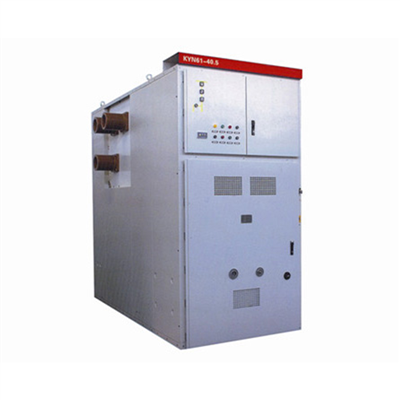
If you’re working on a project right now—whether it’s a new subdivision, a warehouse expansion, a school upgrade, or a remote site that needs reliable power—and you’re tired of dealing with frequent outages, damaged equipment, or inconsistent power, our compact substations are built with power quality as their core feature. We don’t cut corners on the components that regulate voltage, filter harmonics, and protect against faults, because that’s what makes our units stand out from other suppliers. To discuss your specific project needs, sizing, and how a compact substation can deliver the consistent, reliable power your site requires, reach out to our team for a no-obligation consultation.
High Voltage Switchgear References
International Electrotechnical Commission (IEC) 62271-200: High-voltage switchgear and controlgear – Part 200: AC metal-enclosed switchgear and controlgear for rated voltages above 1 kV and up to and including 52 kV
Institute of Electrical and Electronics Engineers (IEEE) 519: Recommended Practice and Requirements for Harmonic Control in Electric Power Systems
U.S. Department of Energy (DOE) Report: Power Quality Benefits of Compact Substations for Urban and Suburban Distributed Generation Applications
Anhui Xinchen Electrical Equipment Co., Ltd.
We are one of the most reliable compact substation manufacturers and suppliers in China, specialized in providing high quality customized products. We warmly welcome you to buy bulk compact substation for sale here from our factory. Contact us for quotation.
Address: No. 8, Waihuan South Road, Economic and Technical Development Zone, Ningguo City, Xuancheng City, Anhui Province
E-mail: xinchen0316@126.com
WebSite: https://www.cn-xinchen.com/
