When it comes to laboratory operations, the question of whether a lab workbench can be effectively utilized in a multi – user environment is a crucial one. As a supplier of lab workbenches, I’ve encountered numerous inquiries from various institutions and research facilities regarding this very topic. In this blog post, I will delve into the practicality, challenges, and advantages of using lab workbenches in a multi – user setting. Lab Workbench
Practicality of Lab Workbenches in a Multi – User Environment
One of the primary factors that make lab workbenches suitable for multi – user environments is their design versatility. Most modern lab workbenches are engineered to accommodate a wide range of scientific equipment and experimental set – ups. For example, they often feature adjustable shelving, multiple electrical outlets, and proper ventilation systems. This flexibility allows different users to customize the workbench according to their specific needs.
Let’s say we have a biology research lab where different researchers are working on various projects simultaneously. One researcher might be conducting cell culture experiments, which require a clean and sterile environment, while another is working on DNA sequencing, which involves the use of high – tech equipment. A well – designed lab workbench can provide the necessary space and infrastructure to support both types of work. The adjustable shelving can be used to store different types of reagents and supplies, and the multiple electrical outlets can power the diverse equipment.
Moreover, lab workbenches are typically built to be durable. They are made from high – quality materials such as stainless steel, epoxy resin, or phenolic resin, which can withstand heavy use, chemical spills, and physical impacts. In a multi – user environment, where the workbench is likely to be used frequently throughout the day, durability is of utmost importance. This ensures that the workbench remains functional and safe for all users over an extended period.
Challenges in a Multi – User Environment
However, using lab workbenches in a multi – user environment is not without its challenges. One of the most significant issues is the potential for cross – contamination. Different users may be working with different types of samples, chemicals, or biological agents. If proper cleaning and decontamination procedures are not followed, there is a risk that these substances could be transferred from one experiment to another, leading to inaccurate results or potential health hazards.
For instance, in a microbiology lab, if a workbench is not properly cleaned after a user has worked with a particular strain of bacteria, the next user may inadvertently introduce that bacteria into their own experiment. This can compromise the integrity of the second experiment and lead to false conclusions.
Another challenge is the management of shared resources. In a multi – user setting, multiple researchers may need to use the same equipment or supplies located on the workbench. This can lead to conflicts over access and usage. For example, if there is only one pipette on the workbench and two users need it at the same time, it can cause delays and inefficiencies in the research process.
To address these challenges, clear guidelines and protocols must be established. Regular cleaning and maintenance schedules should be implemented to prevent cross – contamination. Additionally, a system for managing the use of shared resources, such as a reservation system or a first – come – first – served policy, can help minimize conflicts and ensure that all users have fair access to the necessary equipment and supplies.
Advantages of Multi – User Access to Lab Workbenches
Despite the challenges, there are several advantages to using lab workbenches in a multi – user environment. One of the most significant benefits is cost – efficiency. Instead of each researcher having their own dedicated workbench, which can be expensive to purchase and maintain, multiple users can share a single workbench. This reduces the overall cost of setting up and equipping a laboratory.
In addition, a multi – user environment promotes collaboration and knowledge sharing. When different researchers work side by side on the same workbench, they have the opportunity to exchange ideas, share expertise, and learn from each other. This can lead to new insights and innovative solutions to research problems. For example, a chemist and a biologist working on adjacent projects may discover a new application for a chemical compound in biological research through their interactions.
Furthermore, a multi – user workbench environment can facilitate the efficient use of space. In many laboratories, space is limited, and maximizing the use of available space is crucial. By having multiple users share a workbench, more research can be conducted within the same area, allowing for a higher density of experiments and potentially increasing the overall productivity of the laboratory.
Design Considerations for Multi – User Lab Workbenches
When choosing a lab workbench for a multi – user environment, certain design considerations should be taken into account. First, the workbench should have sufficient surface area to accommodate the needs of multiple users. This may involve having a larger tabletop or multiple tiers of workspaces. For example, a workbench with a double – sided design can allow two users to work simultaneously without interfering with each other.
Second, the workbench should be equipped with proper storage solutions. This includes drawers, cabinets, and shelves to store personal items, supplies, and equipment. By providing adequate storage, users can keep their work area organized, reducing the risk of clutter and potential cross – contamination.
Another important design consideration is the ease of cleaning and maintenance. The workbench should have a smooth, non – porous surface that can be easily wiped down and disinfected. Additionally, it should be designed in a way that allows for easy access to all areas for cleaning, including under the shelves and behind the equipment.
Training and User Education
To ensure the successful use of lab workbenches in a multi – user environment, proper training and user education are essential. All users should be trained on the proper use, cleaning, and maintenance of the workbench. They should also be educated on the importance of following safety protocols, such as wearing appropriate personal protective equipment and using chemicals safely.
Training programs can include hands – on demonstrations, safety workshops, and online resources. By providing comprehensive training, users will be better equipped to handle the challenges associated with working in a multi – user environment and will be more likely to maintain a safe and productive work area.
Conclusion

In conclusion, lab workbenches can indeed be effectively used in a multi – user environment. While there are challenges such as cross – contamination and resource management, these can be overcome through proper design, clear guidelines, and user education. The advantages of cost – efficiency, collaboration, and space utilization make multi – user workbench environments an attractive option for many laboratories.
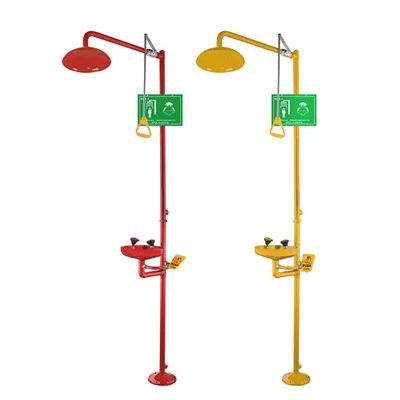
Shower and Eyewash Station If you are considering setting up a multi – user laboratory or upgrading your existing lab facilities, we are here to help. Our lab workbenches are designed with the needs of multi – user environments in mind, offering durability, flexibility, and functionality. We can work with you to customize a workbench solution that meets your specific requirements. To discuss your procurement needs and explore the possibilities, please get in touch with us. We look forward to partnering with you to create a safe and efficient laboratory workspace.
References
- Cooper, J. (2019). Laboratory Workbench Design and Functionality. Journal of Laboratory Science.
- Green, M. (2020). Managing Shared Resources in a Laboratory Setting. Laboratory Management Review.
- Harris, R. (2021). Ensuring Safety in a Multi – User Laboratory Environment. Safety in Science Journal.
HAMECC(Shanghai) Lab Solutions Co., Ltd.
We’re well-known as one of the leading lab workbench manufacturers and suppliers in China, featured by quality products and good price. Please rest assured to buy customized lab workbench made in China here from our factory.
Address: Building 1, No. 2222, Huancheng Road, Jiading District, Shanghai
E-mail: info@hamecc.com
WebSite: https://www.hamecc.com/
