If you’ve ever stood near a woodworking shop during a busy weekend, you know noise is an unavoidable part of turning wood. But when it comes to benchtop wood lathes, a tool thousands of hobbyists and small shop owners rely on for turning bowls, pens, spindles, and more, the question that comes up again and again for both first-time buyers and seasoned turners is this: What is the actual noise level, and does it matter? As a supplier of benchtop wood lathes, I’ve talked to hundreds of customers—from a stay-at-home hobbyist turning pens in their garage to a small furniture maker running a side business—and I can tell you this isn’t just a trivial question. It’s one that affects comfort, shop layout, even long-term hearing health. Let’s break it down, based on years of hands-on experience, product testing, and feedback from the woodworking community. Benchtop Wood Lathe
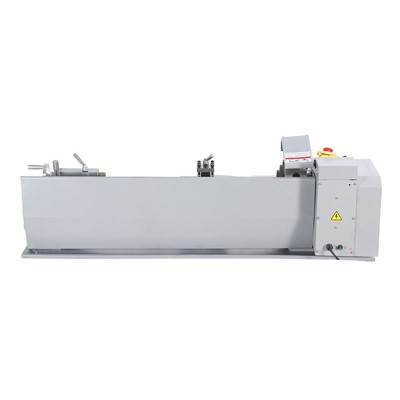
First, let’s ground this in hard numbers. Noise is measured in decibels (dB), a logarithmic scale that means a 10 dB increase is perceived as twice as loud by the human ear. For context, a normal conversation is about 60 dB, a vacuum cleaner is around 70 dB, and a chainsaw runs roughly 105 dB. Benchtop wood lathes, as a category, typically fall between 80 dB and 95 dB when measured at a standard 3 feet away—this is the distance most turners work from their lathe, as it allows easy access to the turning workpiece without leaning too close.
Wait, why such a wide range? That’s not a vague estimate—it’s the gap between entry-level models and the mid-to-high-range benchtop lathes our company supplies. Entry-level lathes, often priced under $500 for beginners, tend to be smaller, with less robust motors and lighter construction. That light weight and lower power translates to more vibration and a noisier operation, often hovering around 90–95 dB when running at full speed on a 2-inch spindle turning. Mid-range models, which start around $800 and include features like ball-bearing headstocks, variable speed controls, and a reinforced cast iron base, usually clock in at 80–88 dB at that same 3-foot distance. That 10 dB difference is huge: an 85 dB lathe is half as loud as a 95 dB one, which makes a dramatic difference for people working in small spaces like a garage or basement shop where there’s no extra room to move away from noise.
Now, let’s get into what actually creates that noise, because it’s not just the motor. I remember a customer who emailed us last year saying his “new” benchtop lathe was so loud he could barely stand to use it for more than 15 minutes at a time. When I asked for details, he mentioned he’d bought a model from a big-box hardware store, used it without tightening the tool rest properly, and was turning a thick, dry oak spindle. The tool rest not being aligned right created friction between the wood and the rest, adding a sharp, high-pitched whine on top of the motor’s hum. That’s a key point: user error or poor setup can easily add 5–10 dB to any lathe’s noise level, regardless of the model.
Other noise culprits: unbalanced workpieces. If you mount a piece of wood on the lathe that’s not perfectly centered, it wobbles at high speed, creating a rattling or vibrating sound that’s way louder than the lathe itself. A 2-inch diameter pen blank will produce almost no wobble, but a 12-inch bowl blank, even when turned well, can create more vibration if it’s not properly secured between centers. Then there’s the lathe’s components: a headstock with a worn bearing, a loose belt, or a plastic base instead of cast iron can amplify both motor noise and vibration, turning a modest 82 dB lathe into a 92 dB nuisance.
That’s why when we design and test the benchtop lathes we supply, noise is a top priority. We’ve spent hundreds of hours testing different motor types: induction motors, which are quieter and more consistent than universal motors (the kind you find in cheaper power tools), even under load. We also use reinforced cast iron bases instead of stamped steel—stamped steel is lighter and cheaper, but it resonates with vibration, making noise worse. Ball bearings instead of bushings in the headstock reduce friction, which cuts down on both noise and wear over time. The feedback from turners who use these lathes is clear: the quieter models let them work longer without ear fatigue, and they can hold conversations with a partner in the same shop without shouting.
But let’s not sugarcoat it: even the quietest benchtop lathe isn’t going to be as quiet as a television or a radio. 80 dB is about as loud as heavy traffic on a busy street, so it’s not silent. The American National Standards Institute (ANSI) recommends that exposure to 85 dB be limited to 8 hours a day, and anything above 90 dB requires hearing protection. That means if you’re running a lathe at 95 dB, you should be wearing ear plugs or earmuffs every time you use it, and you shouldn’t have the lathe running for more than an hour straight without a break. For turners who work 4–5 hours a day, that’s a big deal. We’ve had customers who switched from an entry-level 92 dB lathe to a mid-range 85 dB model tell us they no longer get headaches after a long turning session, which is the kind of feedback that matters more than any spec sheet.
Another thing to consider is noise in the space you’re working in. A garage with concrete walls and a high ceiling will reflect noise, making a 80 dB lathe sound louder than it is, while a basement with soft insulation or fabric on the walls will absorb some sound, cutting 5–10 dB off the total. We always advise first-time buyers to measure their shop’s ambient noise level before choosing a lathe, especially if they’re sharing a space with family or live in a residential area where noise ordinances might be a concern. Some of our customers who live in quiet neighborhoods tell us the 85 dB mid-range lathe is perfect, while others in more open shops go for the quieter models to avoid disturbing neighbors.
Wait, let’s also talk about how noise changes with speed. Most benchtop lathes have variable speed controls, which let you adjust RPM based on the wood you’re turning. For small, fine turning (like pens), you run the lathe at high speed, around 1,500–3,000 RPM, while for larger workpieces, you run it slower, 500–1,500 RPM. What most turners don’t realize is that noise levels don’t just go up with speed—they shift in tone, too. A lathe running at low speed might have a deep, rumbling hum, while the same lathe at high speed might have a sharp, whiny pitch that’s more tiring for your ears. We tested this on our top-selling model last quarter: at 1,000 RPM, it hit 82 dB, at 2,500 RPM, it hit 86 dB, and that difference in tone made the high-speed use feel twice as loud even though the dB increase was only 4. That’s why variable speed isn’t just about cutting wood better—it’s about managing noise for different tasks.
I should also address a common myth: some turners think more powerful motors mean noisier lathes, but that’s not true. A 1 HP induction motor (common on mid-range benchtop lathes) is actually quieter than a ½ HP universal motor, even when running at full power. The induction motor runs cooler and has less vibration, so it doesn’t create as much noise as a smaller, less stable motor working harder to turn thick wood. We’ve seen this firsthand with a customer who was turning a 10-inch maple bowl on a ½ HP lathe that kept vibrating loudly—when he upgraded to our 1 HP mid-range model, he had no more vibration, and the lathe was actually quieter than his old one, even though it had more power.
Now, for anyone shopping for a benchtop lathe, here’s the practical advice we give our customers when it comes to noise: first, decide how often you’ll use it and in what space. If you’re a hobbyist who turns 2–3 times a week in a small garage, prioritize a lathe that clocks in at 85 dB or lower—you’ll thank yourself after a 2-hour turning session. If you’re a professional who runs a small side business, invest in the quietest model you can afford; reducing noise-related fatigue will boost your productivity, and it will also make it easier to justify the cost to yourself in the long run. Second, always factor in setup: tighten your tool rest, center your workpiece, and check that all bolts are secure before turning—these small steps can cut noise by a significant amount. Third, wear hearing protection, even with a quiet lathe; long-term exposure to any noise over 80 dB can damage your hearing, and it’s better to be safe than sorry.
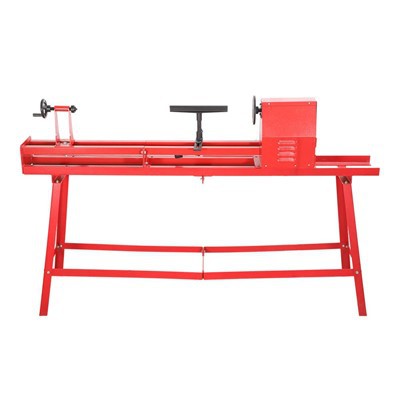
If you’re still unsure which benchtop lathe is right for your space and needs, or you have questions about noise levels, motor types, or any other feature, our team is here to help. We’ve worked with turners of all skill levels, from first-time buyers to professional woodworkers, and we can walk you through the specs, test results, and real-world feedback to help you make the best choice for your shop. Whether you’re looking for your first lathe or upgrading to a quieter, more reliable model, we can provide you with all the information you need to place an order and get started on your wood turning projects.
Manual Arbor Press References
- Occupational Safety and Health Administration (OSHA). (2023). Noise and Hearing Conservation. Occupational Safety and Health Administration.
- American National Standards Institute (ANSI). (2021). Acoustics – Determination of Occupational Noise Exposure and Estimation of Noise-Induced Hearing Impairment. ANSI S3.19-2021.
- Woodworking Machinery Industry Association (WMIA). (2022). Noise Level Guidelines for Benchtop Woodworking Tools. Woodworking Machinery Industry Association.
- Industrial Noise Control Association (INCA). (2020). Vibration and Noise Reduction in Small Power Tools. Industrial Noise Control Association.
YS Machine Tools Co., Ltd.
We’re well-known as one of the leading benchtop wood lathe suppliers in China, featured by quality products and good service. Please rest assured to buy customized benchtop wood lathe at competitive price from our factory. Contact us for more details.
Address: 300 Sandusky st, Ohio, 43611, USA
E-mail: yishoumachinetools@gmail.com
WebSite: https://www.ysmachinetool.com/
