If you’ve ever installed a kitchen drawer that sticks halfway open, or a file cabinet that pulls out smoothly only on one side, you’ve felt the difference a good slide rail makes. As a slide rail supplier, I don’t just sell metal and plastic components—I build parts that have to hold up to decades of use, resist weather, and work reliably in spaces that range from a cold storage warehouse to a sun-dappled outdoor garden shed. Every project I quote, every slide I ship, has to meet specific environmental requirements that most people don’t think about until something breaks. Today, I want to break down what those requirements actually are, why they matter, and how my team designs slide rails to meet them—no fancy jargon, just the real-world lessons I’ve learned from 12 years in this business. Slide Rail

First, let’s talk about temperature extremes. That’s the biggest one I run into, more than any other. Last year, a customer in northern Alaska reached out because their old slide rails for industrial tool chests were seizing up during the -40°F winters. They’d bought generic online rails that worked fine in mild weather, but when the mercury dropped low enough, the lubricant inside turned to sludge, and the metal parts expanded or contracted at different rates, causing jams. On the flip side, I’ve had customers in Phoenix, AZ, needing rails for outdoor storage units where summer temperatures hit 115°F in the shade. At that heat, plastic parts can warp, grease can evaporate, and metal can soften just enough to lose its tension.
The solution here isn’t one-size-fits-all. For cold environments, we use low-temperature synthetic lubricants that stay fluid even at -60°F—way colder than most project specifications. We also choose steel alloys that don’t become brittle in cold, like 304 stainless steel instead of regular mild steel, which cracks when it gets too frosty. For hot environments, we use high-temperature plastic fillers in the slide’s rollers that don’t melt or deform, and we apply a dry lubricant coating (like PTFE) that doesn’t evaporate even at 200°F. A big mistake I see other suppliers make is using the same lubricant for every job—we test each batch of rails in a temperature chamber for 1,000 open/close cycles before it leaves our warehouse, because that’s how we make sure it works when the weather turns ugly.
Next is moisture and corrosion resistance. This is a close second in terms of common issues. I once had a customer in Florida with outdoor kitchen islands who called at 2 a.m. panicking because their drawer slides had rusted shut overnight during a hurricane. The old rails were plain steel with a basic paint coating, which scratched easily when the drawers were opened, and saltwater from the storm got under the paint and ate through the metal in 24 hours. Corrosion doesn’t just look bad—it weakens the rail’s load capacity and causes it to jam, which can be dangerous if it’s a medical cart or a heavy tool cabinet.
So what do we do differently? For applications exposed to water, humidity, or salt (like coastal areas or industrial washdown zones), we use two layers of protection. First, we process the steel with a zinc phosphate conversion coating, which etches into the metal to create a porous surface that paint or powder coat adheres to tightly. Then we apply a powder coat finish that’s tested to resist salt spray for 500+ hours without rust—way above the industry standard of 200 hours. For rails that will be fully submerged, like those used in boat storage compartments, we go a step further with a galvanneal coating (hot-dip galvanized that’s heat-treated to prevent flaking) and a PTFE impregnation on the load-bearing parts. We also seal the ends of the slide with a small rubber cap to keep water from getting trapped inside the roller mechanism, which is a tiny detail that makes all the difference.
Another environmental factor people often overlook is dust and particulate contamination. That’s a huge issue for construction sites, farm equipment, or factories where wood shavings, concrete dust, or metal filings fill the air. A generic slide rail with exposed rollers will collect dust after a few uses, and the particles will act like sandpaper, wearing down the plastic rollers and scoring the metal tracks. Last quarter, a construction supply company ordered 200 sets of rails for their job site tool cabinets, and their first complaint was that the drawers got stuck after a month. We realized they were using standard open-design rails, so we swapped them for sealed, enclosed slide designs that have a protective outer cover that blocks dust. The enclosed rails have a small gap that lets air and a tiny bit of lubricant through, but not enough to let large particles in. We also add a self-cleaning function to these rails: the roller design pushes out any small dust particles that do get in when the drawer is fully opened. That same design works great for farm silos too, where grain dust is constant.
Load capacity is tied directly to environmental requirements, and that’s something I have to measure carefully for each project. A slide rail that works fine in a temperature-controlled office might not hold up in a garage where people are shoving 200-pound toolboxes into drawers. I test every rail set to its rated load in the specific environmental conditions it will face. For example, if a customer needs rails for a refrigerator drawer that holds 150 pounds, I don’t just test the rail in a room temperature warehouse—I test it at 34°F, too, because the cold can make the metal slightly stiffer and change how the load is distributed. I also run fatigue tests: 10,000 full open/close cycles, which is about 10 years of regular use, to make sure the rail doesn’t lose tension or wear down prematurely.
Chemical exposure is another big one, especially for labs, factories, and automotive applications. A hospital client once came to me with slides for lab supply carts that were getting damaged by exposure to disinfectant wipes and cleaning chemicals. The plastic parts of the rails were cracking, and the metal was pitting, because the supplier had used cheap plastic that wasn’t rated for harsh chemicals. For these jobs, we use chemical-resistant plastic composites, like nylon with a glass filler, that don’t break down when exposed to alcohols, bleach, or common lab solvents. The metal coatings we use are also resistant to these chemicals—no plain paint, because most chemicals will eat through regular paint. We test the rails by wiping them down with the same chemicals the customer uses for 100 cycles, and if there’s any fading, cracking, or corrosion, we adjust the coating or plastic blend until it passes.
Let me also talk about noise, which is an environmental requirement for residential and office spaces that’s often missed. A slide rail that’s loud when opened is considered a nuisance in apartments, libraries, or classrooms, even if it works perfectly. For these applications, we use noise-dampening inserts on the rollers and rubber bumpers on the ends of the rails to soften the impact when the drawer closes. We test noise levels in an anechoic chamber before shipping, to make sure the rail is under 30 decibels when closed—about as loud as a whisper. That’s a requirement I take very seriously, because a lot of suppliers cut corners on noise control, which leads to unhappy customers.
Over the years, I’ve learned that the best way to meet environmental requirements is to ask the right questions upfront. I don’t just send a catalog of rails and say “pick one.” When a customer reaches out, I ask them: Where will this rail be installed? What’s the temperature range there? Is it exposed to water, dust, or chemicals? How much weight will it hold, and how often will it be opened? Those details let me customize the rail to their exact needs, instead of selling them a generic product that will fail. Last year, a customer in a mine reached out with a custom request for rails for storage lockers 1,000 feet underground. It’s a dusty, humid environment with constant 75°F temperatures, and the rails get opened 50 times a day by workers with dirty hands. We ended up making rails with sealed nylon rollers, powder coated steel, and a light food-grade lubricant (since workers sometimes touch the rails) that resisted dust and humidity. They’ve ordered 500 more sets this year, which tells me we got it right.
I also work with a small team of engineers in-house, not a third-party design firm, so I can tweak the rails on the fly if a customer has a unique challenge. Recently, a customer needed rails for a solar panel mounting system that would be exposed to UV radiation for 20 years. Off-the-shelf rails would turn brittle and crack after a few years in the sun, so we developed a special UV-stabilized powder coat and a plastic roller that resists fading and cracking from sun exposure. We tested the rails with a UV chamber that simulates 10 years of sunlight in 30 days, and they passed with zero degradation. That’s the kind of custom work that matters—generic suppliers can’t do that, because they don’t have the in-house expertise to adjust for specific environmental conditions.
I know that for a lot of buyers, the first thing they look at is price, and I get that. But cutting corners on environmental requirements leads to more costs down the line—replacing rails every six months, repairing damaged equipment, dealing with unhappy customers. As a supplier, my goal is to build rails that last, no matter where they’re installed. I’ve seen enough projects where cheap rails failed because the supplier didn’t account for the environment, and I don’t want my customers to have that problem.
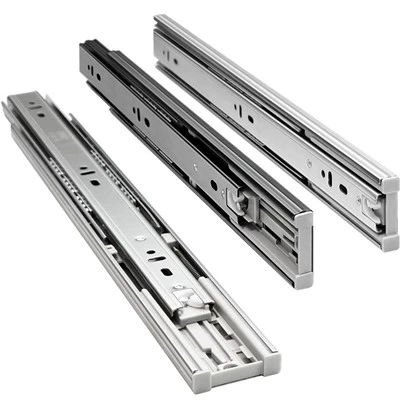
If you’re working on a project that needs slide rails, whether it’s for a kitchen, a warehouse, an outdoor storage unit, or a medical cart, don’t just go for the cheapest option. Take the time to think about the environment the rails will face, and reach out to talk through your needs. I’m here to help you figure out the right rail for your project, no matter how big or small.
Clothes Hook References:
- International Organization for Standardization (ISO) 12207:2017, Space systems – Software life cycle processes
- ASTM B117:21, Standard Practice for Operating Salt Spray (Fog) Apparatus
- ASME B30.20-2022, Below-the-Hook Lifting Devices
- Nylon and Composite Materials for Industrial Applications, Society of Plastics Engineers, 2021
- Lubrication for Extreme Temperature Environments, Tribology International, Volume 152, 2021
Guangzhou Fengcheng Industrial Co., Ltd.
As one of the most professional slide rail manufacturers and suppliers in China, we’re featured by quality products and good price. Please rest assured to buy bulk slide rail for sale here and get quotation from our factory. We also accept customized orders.
Address: No. 135-136, Tianjian Square, Baiyun District, Guangzhou City, Guangdong Province
E-mail: fc223228@163.com
WebSite: https://www.foncher.com/
