If you’ve ever walked into my workshop—cluttered with thermoplastic sheets, precision grinders, and the faint, clean smell of dental acrylic—you know I don’t do one-size-fits-all. For over a decade, my team and I have made custom night guards and sports guards for dentists, athletes, and regular folks who grind their teeth at night or need protection for a high-impact sport. And the question I get asked more than any other? “Do I need to adjust my guard after dental work?” Night Guard and Sports Guard
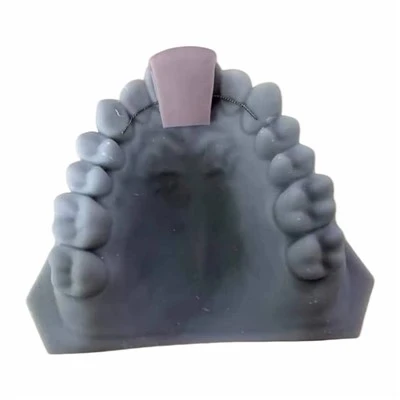
This isn’t a trivial question. Last year, I had a regular client—let’s call him Mark, a 32-year-old recreational hockey player who’s used our custom sports guard for five years—come in panicking after getting two crowns on his upper front teeth. He’d worn his old guard to his weekly game the night before, and by the third period, his jaw felt like it was clamped in a vice. “I can’t bite down right,” he said, running his tongue over his new crowns, “and my guard feels like it’s pushing wrong.”
I took a look at his old guard, pulled up his 2019 dental records, and compared them to the digital scan I’d just run of his new crowns. Sure enough, the guard’s inner surface was shaped to fit the natural curve of his upper teeth before the crowns. The crowns added roughly a millimeter of height to two adjacent teeth, throwing off the entire fit. Mark’s guard was no longer sitting evenly—one edge dug into his lower gum, and the contact points between his upper and lower teeth were misaligned, triggering the jaw pain he’d been feeling.
Mark’s story isn’t an anomaly. Dental work—whether it’s crowns, bridges, fillings, implants, or even a simple deep cleaning that reshapes a tooth’s surface—changes the structure of your mouth. And if you’re wearing a night guard or sports guard that’s already fitted to your old mouth, that change can lead to a whole host of problems. The short answer is: yes, most of the time, you do need to adjust or replace your guard after dental work. But let’s break down why, how, and when it matters—because not every dental procedure means a new guard, and rushing to make a new one isn’t always necessary.
First, let’s talk about how these guards work, because the science is less complicated than you’d think. A custom night guard (used for bruxism, or teeth grinding, while sleeping) and a sports guard (used for impact, so your teeth don’t chip or crack) are both precision-fitted to the unique shape of your teeth and bite. They act as a buffer: for night guards, they prevent your upper and lower teeth from grinding directly against each other, which wears down enamel and causes jaw tension (that’s temporomandibular joint disorder, or TMJ pain, if you’ve felt it). For sports guards, they absorb the force of a punch or a fall, so your teeth don’t get knocked out, chipped, or fractured.
When you get dental work done, even something as small as a white filling on a lower molar, you’re changing the height or shape of one or more teeth in your arch. Let’s say you get a filling on a back molar that was worn down from grinding. That filling adds surface area to the tooth, so when you bite down, that molar now hits its opposite lower tooth a fraction of a millimeter higher than before. If your night guard was molded to your old bite, that means when you slip it on at night, that filled tooth is sitting in a different spot—so the guard can’t distribute pressure evenly. Instead, that extra height might cause the guard to shift, or force your jaw to clench more tightly to compensate, leading to morning headaches or soreness.
Sports guards have an even smaller margin for error. If you’re playing basketball and take an elbow to the mouth, your guard needs to cover every tooth evenly to spread the impact. If you just got an implant on your upper incisor that’s a tiny bit taller than your old tooth, your guard might not sit flush. That could mean the impact doesn’t spread across all your teeth—instead, that single implant tooth takes the full force of the hit, which could crack or loosen it. I had a high school football client a few years back who skipped getting a new guard after getting four implants. He took a shoulder to the jaw in a game, and the guard pushed his lower teeth into one of the new implants, causing a small fracture that required a root canal. That’s a cost way higher than just adjusting a guard would’ve been.
But here’s the thing: not every dental procedure means you need a whole new guard. Some minor adjustments are possible, especially if the dental work is small. Let’s say you get a small filling on a back tooth, and your guard has a little extra room there (which some guards do, depending on how they’re made). I can take the guard, place it back on your teeth, and use a precision grinder to shave down the inner surface where the filling is, so it sits flush. For sports guards, that might mean smoothing a tiny spot on the guard that now hits the new dental work, no need to start from scratch.
But for larger procedures, like crowns, bridges, implants, or orthodontics that move multiple teeth, replacement is almost always the better option. Crowns, for example, are custom-made to fit a single tooth, but they change the contour of your entire upper or lower arch in a way that a small adjustment can’t fix. The entire bite alignment shifts, which means the guard’s contact points between upper and lower teeth are no longer matching. I worked with a dentist in Chicago last year whose patient got six upper crowns, and trying to adjust their old night guard caused more TMJ pain than the bruxism did. We ended up making a new guard from a digital scan of their new teeth, and within a week, the pain was gone.
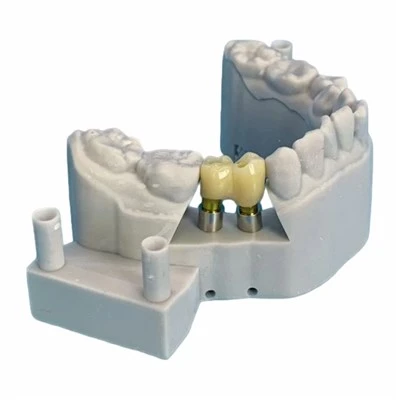
Or take implants. An implant is a permanent replacement for a missing tooth, and it’s fused to the jawbone, so it doesn’t move like a natural tooth. If your old guard was made to fit around a gap where the implant now sits, that gap is gone—so the guard might rub against the gum around the implant, causing irritation or even gum recession over time. Implants also have a different surface texture than natural teeth, so a guard that’s molded to fit natural teeth might not seat properly around an implant, leading to it shifting out of place at night or during sports.
The key here is timing. Most dentists will advise you to wait two to four weeks after major dental work (like crowns or implants) to get a guard adjusted or made new. Why? Because it takes that long for your mouth to heal. The gum tissue around a new crown or implant is still sensitive, and your bite might be a little off as your jaw adjusts to the new structure. If you rush to make a new guard too soon, you might end up with a guard that fits while your mouth is swollen, but feels too tight or loose once the swelling goes down. For minor work like fillings, you can usually come in within a week, as long as you’re not feeling any pain or unusual bite changes.
Now, let’s talk about how to tell if your guard needs an adjustment. You don’t have to wait until you’re in pain. Some common signs: morning soreness in your jaw or temples, the guard feels looser or tighter than usual, it rubs against your gums (you might see small red spots or even a slight cut), or when you bite down, it feels like something’s “off” or not even. For athletes, if you notice the guard shifting during a game, or if it’s harder to talk or breathe while wearing it, that’s a sign it’s not fitting right anymore.
I also recommend that, after any dental work, you take a quick test at home. Put your guard on, bite down as you normally would, and run your tongue along the inner surface. If it feels smooth and even, no rough spots, that’s a good sign. If you feel any unevenness, or if a part of the guard is pushing against a new tooth, that’s when you should reach out to a guard provider like us to take a look.
A lot of people ask me, “Can I just trim it myself?” My answer is always no. Trimming a custom guard requires precision—you can’t just take a pair of scissors and snip a little here or there. If you trim too much, you can create gaps that let bacteria build up (guards can be a breeding ground for bacteria if they don’t fit right), or you can throw off the bite alignment even more, leading to more jaw pain. The same goes for sports guards: if you trim a spot that’s supposed to absorb impact, you could weaken the guard, making it less effective when you need it most.
Let’s circle back to Mark, the hockey player I mentioned earlier. He came in a week after his crowns were placed, and we took a digital scan of his mouth, which we used to make a new sports guard. The process only took a few days—we send the scan to our lab, they mill the guard from a medical-grade thermoplastic, and we do a quick fitting at my shop. When Mark tried the new guard, he bit down, nodded, and said, “That’s it—no more jaw ache.” He was back on the ice the next week, and his guard fit perfectly.
Another example: my dad, who grinds his teeth at night and has worn our night guard for seven years. A year ago, he got a bridge on his lower molars. Instead of making a new guard, we adjusted his old one. We used a small grinder to reshape the inner surface where the bridge sits, so it fits flush, and now he’s had no issues. That adjustment cost a fraction of making a new one, and it worked just as well.
The takeaway here is that custom guards are an investment—they protect your teeth, your jaw, and for athletes, your ability to play the sports you love. So it’s worth taking the time to make sure they fit, especially after dental work. If you’re unsure whether your guard needs adjusting, reach out to a provider who specializes in custom night guards and sports guards. They can compare your dental records, check the fit, and tell you if an adjustment or replacement is needed.
At the end of the day, it’s better to be proactive than reactive. Skipping an adjustment or new guard after dental work might save you a little money upfront, but it could lead to costly dental work later—cracked teeth, damaged implants, or chronic TMJ pain that takes months to fix. A $50 adjustment is nothing compared to a root canal or an implant repair.
If you’ve recently had dental work done and you’re worried about your guard, don’t hesitate to reach out. We’re here to help—whether that’s a quick adjustment or a new custom guard made just for your new smile. We work closely with dentists across the country, and we use the latest digital scanning technology to make sure every guard fits perfectly, every time.
Flexible Valplast Denture References
- Lobbezoo, F., et al. (2018). International consensus statement on the classification of bruxism. Journal of Oral Rehabilitation, 45(10), 816-828.
- American Dental Association. (2021). Mouthguards: Protection for Contact Sports. Retrieved from ADA.org
- Okeson, J. P. (2019). Management of Temporomandibular Disorders and Occlusion (8th ed.). Elsevier.
- Tiwari, A., et al. (2020). Fit and effectiveness of custom-made vs. over-the-counter mouthguards in contact sports. Journal of Prosthetic Dentistry, 124(3), 356-361.
- American Academy of Implant Dentistry. (2022). Oral Hygiene for Dental Implants. Retrieved from AAID.com
Shenzhen Tuomei Dental Technology Co., Ltd.
We are one of the most professional night guard and sports guard manufacturers and suppliers in China, featured by quality products and low price. Please rest assured to buy discount night guard and sports guard made in China here from our factory. Welcome to view our website for more information.
Address: Room 301, Building C Fuhe Industrial Park No.18 Hexiu West Road, Zhancheng Community Fuhai Subdistrict, Bao’an District, Shenzhen, Guangdong, China
E-mail: dentallab.works@gmail.com
WebSite: https://www.sztuomeidentallab.com/
